

What happens when one flight lands early, another is delayed and the group’s oversized luggage won’t fit the vehicle you booked? If you searched for managing group travel logistics, you’re likely looking for a way to keep people, bags and timings on track without adding stress to the trip.
It’s easy to focus on the vehicle first. A clear itinerary helps you match transport to arrival times, destinations, passenger numbers and luggage. You’ll also need pickup instructions everyone can follow, plus a straightforward way to confirm details and share changes.
This guide explains how to plan group transport with fewer last-minute surprises. You’ll learn what to include in your itinerary, what to confirm before arranging a vehicle, and when a private transfer or small group charter may suit a party travelling together with Zoom FNQ. The aim is simple: give everyone a practical plan and choose transport that fits the trip.
Key Takeaways
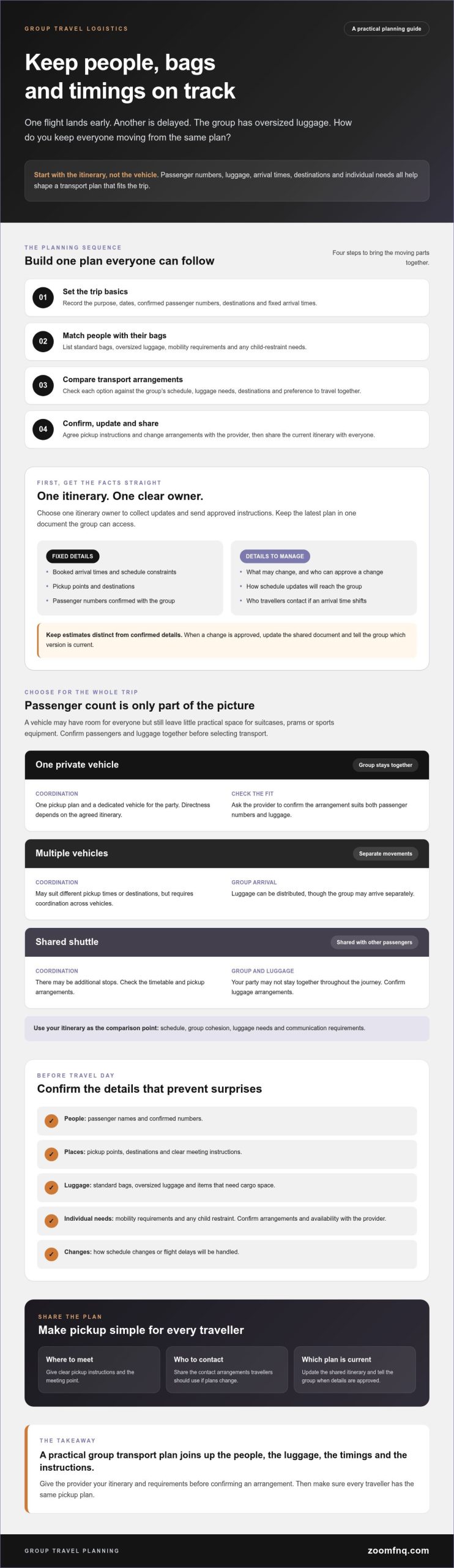
- Start with the trip purpose, dates, passenger count, destinations and fixed arrival times so everyone is working from the same itinerary.
- Assess luggage and timing as well as passenger numbers before choosing a vehicle arrangement.
- Compare one private vehicle, multiple vehicles and shared transport against your group’s schedule, cohesion, luggage needs and communication requirements.
- Before travel day, confirm passenger names, pickup points, destinations, oversized luggage and how schedule changes or flight delays will be handled.
- Give the provider your itinerary and any child-restraint requirements when enquiring, then share clear pickup instructions with the group.
Managing group travel logistics cairns: build the plan around your itinerary
Start with the parts of the trip that are fixed, such as booked arrival times, accommodation check-ins and scheduled activities. Then identify what can change, who will make decisions and how updates will reach the group. This gives you a practical basis for choosing transport and reduces the chance of conflicting instructions.
How to start managing group travel logistics with a clear plan
Your group lands, but not everyone arrives together. Some travellers head to their accommodation while others check in later, and messages start arriving with different pickup ideas. Who has the latest plan? Before arranging transport, create one itinerary that accounts for the whole group and gives everyone clear instructions.
Group travel logistics are the coordination of people, timings, luggage and transport so each part of a trip works together. The wider idea of logistics includes planning and organising movement. The same principle applies here: gather, check and share the details. Begin with the trip’s purpose, dates, confirmed passenger numbers, destinations and fixed arrival times. These essentials shape the transport plan.
Choose one itinerary owner to collect updates and send approved instructions. Without a clear point of contact, travellers may receive duplicate messages or conflicting pickup details. The owner doesn’t need to make every decision alone, but should maintain the current version of the plan.
What should you confirm before arranging group transport?
Gather details from each traveller before asking a provider to recommend an arrangement. Separate confirmed information from estimates, and label anything provisional so it isn’t mistaken for a final booking detail.
- Confirm passenger numbers, pickup points, destinations and schedule constraints.
- Ask about standard bags, oversized luggage and any items that may affect cargo space.
- Record relevant mobility requirements and whether a child restraint is needed. Confirm arrangements and availability with the provider before relying on them.
A passenger count alone won’t show whether a vehicle arrangement is suitable. Luggage, timing and individual needs matter too, so share the full picture before confirming transport.
How do you create one shared itinerary?
Keep the latest plan in one document that the group can access. Include key timings, pickup instructions, destinations and the contact arrangements travellers should use if plans change. When a change is approved, the itinerary owner should update the document and tell the group which version is current.
Keep instructions practical: where to meet, who to contact and what to do if an arrival time shifts. If you’re weighing up transport arrangements, a small group transport guide can help you explore the options. Whatever you choose, clear information gives the provider a sound basis for planning and helps your group stay coordinated.
Matching Group Size, Luggage and Timing for Transport
A vehicle may have room for every passenger but still leave little practical space for suitcases, prams or sports equipment. Passenger numbers alone don’t determine whether an arrangement will work. Assess luggage, schedule and the group’s need to travel together as well as the headcount.
Planning rule: confirm passengers and luggage together before selecting transport. Then compare the options against your itinerary, rather than choosing by vehicle size alone.
| Arrangement | Coordination and directness | Luggage fit and group cohesion |
|---|---|---|
| One private vehicle | One pickup plan and a dedicated vehicle for the party. Directness depends on the agreed itinerary. | The group stays together, but the provider must confirm passenger and luggage suitability. |
| Multiple vehicles | Can accommodate different pickup times or destinations, but requires coordination across vehicles. | Luggage can be distributed, though the group may arrive separately. |
| Shared shuttle | Passengers share the vehicle with others, and there may be additional stops. Check the timetable and pickup arrangements. | Other passengers travel together, so your party may not stay together throughout the journey. Confirm luggage arrangements. |
How should you plan around luggage and special requirements?
List standard bags separately from oversized luggage, such as golf clubs, surfboards or prams, and mention anything that may need dedicated cargo space. Give the provider the full list and ask them to confirm that the proposed vehicle arrangement suits your group. If anyone needs a child restraint, raise it when enquiring and confirm availability and arrangements before relying on it.
Which transport arrangement suits your group itinerary?
A private transfer may suit a party that wants a dedicated vehicle and a shared itinerary, provided the passenger and luggage requirements fit the arrangement. Multiple vehicles can help with separate schedules, but someone will need to coordinate pickups and updates. A shared shuttle may involve other passengers and extra stops, so it may be less direct. No option suits every group; use your timings and priorities to guide the choice.
For more detail on group-specific transport arrangements, refer to a small group transport guide as you compare options. If you’re considering a private transfer or small group charter, you can share your itinerary and transport requirements to support an informed enquiry. For general travel-provider checks, the ATIA accredited travel professional resource may also be useful. Confirm directly whether any accreditation applies to the service you’re considering.
How to compare private transfers, shared shuttles and separate bookings
One group and one itinerary sound simple, until some travellers need to leave earlier or head to a different destination. The best arrangement depends on how much schedule control you need, whether staying together matters, what the group is carrying and how much coordination you’re prepared to manage. Compare the trade-offs against your actual itinerary rather than assuming one option will suit everyone.
A private transfer reserves a vehicle for one party. A shared shuttle carries unrelated passengers and may make additional stops. Separate bookings can mean arranging more than one vehicle, with each booking managed on its own schedule.
| Option | Schedule and coordination | Group cohesion and luggage |
|---|---|---|
| Private transfer | One pickup plan for the party. Confirm the itinerary and vehicle suitability with the provider. | Your party travels together, subject to confirmed passenger capacity and cargo space. |
| Separate vehicles | Can suit participants with genuinely different schedules or destinations, but requires coordination across bookings. | The group may arrive separately. Confirm the luggage arrangement for each vehicle. |
| Shared shuttle | You share the service with other passengers, so the pickup sequence and stops may not follow only your group’s preferences. | Other passengers may travel alongside your party. Check how luggage is handled and whether the service fits your timing. |
When can a private transfer simplify group coordination?
If your party is travelling on a shared schedule, a private transfer can put one pickup plan and one dedicated vehicle at the centre of the itinerary. That can make it easier to keep the group together and share consistent instructions. Before booking, confirm pickup details, destinations, passenger numbers, luggage and any child-restraint needs. Ask the provider to confirm vehicle suitability; don’t infer capacity from the passenger count alone.
For airport-specific planning, use the same checks for flight arrivals, meeting instructions and how schedule changes will be communicated. You can review private transfer booking details when considering this arrangement.
When might separate vehicles or shared transport be considered?
Separate vehicles may make sense if travellers have different commitments or destinations. The trade-off is extra coordination: someone needs to track each pickup and make sure instructions reach the right people. A shared shuttle may reduce the need to organise individual bookings, but other passengers and intermediate stops can affect directness and group cohesion. Check the specific service conditions before deciding.
Compare each option against four practical questions: Can it meet your schedule? Will your group stay together? Does the luggage fit? Who will manage communications? The answers will help you choose an arrangement that fits your trip, without treating any option as the automatic choice.
What to confirm before the group’s travel day
A well-planned transfer can still become confusing if one traveller has an old pickup time or doesn’t know where to meet. Before travel day, check that the booking details match the latest itinerary, then give the group one clear set of instructions. A final confirmation helps you catch missing details while there’s still time to ask questions.
Travel-day confirmation checklist
- Passenger details: Confirm the names and number of travellers, and identify any changes since the booking was arranged.
- Pickup and destinations: Check each pickup point, agreed meeting point, timing and destination against the itinerary.
- Luggage: Reconfirm the expected bags and any oversized luggage, so the provider can verify the vehicle arrangement and cargo space.
- Special requirements: Confirm mobility needs and any requested child restraints directly with the provider. Check the arrangements rather than assuming a restraint will be available.
- Changes: Ask how to contact the provider if a traveller’s plans or schedule changes, and what flight-delay process applies if the booking is linked to an arrival.
How do you prepare travellers for a coordinated pickup?
Send every passenger the same approved instructions. Include the meeting point, pickup time, destination and the nominated organiser’s contact details. Ask travellers to report changes to that person promptly, rather than sending separate updates to different contacts. The organiser can then confirm what needs to be passed on to the provider and update the group with one consistent message.
For airport-related travel, don’t assume a delay will automatically change a pickup time. Ask the provider what process applies and who should communicate an updated arrival time. If your group is travelling for business, flight-tracking guidance can also help you prepare questions about monitoring arrivals and delay procedures.
What contingency details should an organiser plan?
Decide who will act if a traveller is delayed, a flight time changes or the schedule needs revising. Keep the provider’s contact process and the organiser’s details in the shared itinerary, and make sure travellers know which channel to use. Clear responsibility helps prevent a change being missed or multiple people sending conflicting instructions.
Once your passenger details, pickup plan, luggage and any child-restraint needs are ready, share your group transfer requirements when enquiring. Confirm the agreed details with the provider and circulate the final instructions to your travellers.
How to book group transport with confidence
A clear booking enquiry gives the transport provider a better picture of what your group needs. Before confirming an arrangement, work through a simple sequence: finalise the requirements, compare suitable transport options, check the agreed details with the provider, then share clear instructions with travellers. This keeps decisions connected to the itinerary rather than guesswork.
Consistency matters. If the passenger count or luggage list changes after your enquiry, pass on the update and ask whether it affects the proposed arrangement. Zoom FNQ offers private transfers and small group charters, which you can assess against your group’s schedule, destinations and transport requirements.
What information should you include in a group transport enquiry?
Give the provider enough detail to assess the request accurately. Include:
- Date and schedule: The intended travel date, fixed arrival times and any timing constraints.
- Passenger details: The confirmed passenger count, pickup points and destinations.
- Luggage: The number and type of standard bags, plus any oversized luggage that may need extra cargo space.
- Special requirements: Any mobility needs and child-restraint requirements.
Ask the provider to confirm vehicle capacity and cargo space for your particular group. If you need a child restraint, confirm its availability and arrangements directly before finalising the travel plan. These checks help you understand whether the suggested transport fits the information you’ve supplied.
How can you make the final booking process clearer?
Before treating the arrangements as final, ask the provider to confirm the itinerary, pickup instructions and destinations, along with any outstanding requirements. Check that the confirmation reflects the latest passenger and luggage details. If something is still provisional, clarify what needs to be confirmed and how updates should be communicated.
Keep the booking details with the organiser and share the relevant instructions with each traveller. Make sure everyone knows the agreed meeting point, pickup time and contact person. A family-owned provider and professional drivers may also be useful considerations as you assess service and communication, though you should confirm the arrangements that matter to your group directly.
Ready to discuss your group’s requirements? Submit a group transport enquiry with your date, itinerary, passenger numbers, luggage details and any child-restraint needs. The provider can then respond to the specific information you’ve supplied.
Make your group’s transport plan travel-ready
Successful group travel planning starts with one clear itinerary and transport that fits the real requirements of your party. Confirm passenger numbers alongside luggage, timings and destinations, then compare arrangements based on how closely they match your schedule and whether the group needs to stay together.
Before travel day, check the final pickup instructions, change process and any child-restraint arrangements with your provider. These practical steps give travellers one clear plan to follow and help you address uncertainties before they become last-minute questions.
Zoom FNQ is a family-owned private transfer business offering professional drivers and small group charters. Discuss any child-restraint requirements when you enquire, and confirm vehicle suitability and the arrangements your group needs directly with the provider.
Ready to share your itinerary and transport requirements? Enquire about group transport. With the details organised, you can look ahead to a more coordinated journey.
Frequently Asked Questions
How do you manage logistics for a group trip?
Start with one shared itinerary and appoint an organiser to keep it current. Record the trip dates, confirmed passenger numbers, pickup points, destinations, arrival times and any schedule constraints. Ask travellers about luggage, mobility needs and child-restraint requirements, then mark estimates clearly until confirmed. Compare transport arrangements against the full itinerary and send the group one set of approved pickup instructions.
Is a private transfer better for group travel than a shared shuttle?
A private transfer may suit your group if you want a vehicle reserved for your party and a shared pickup plan. A shared shuttle carries other passengers and may include additional stops, so consider whether that fits your schedule and preference to travel together. Neither option suits every trip. Compare directness, luggage arrangements, schedule control and communication needs before deciding, and confirm the service details with the provider.
How do I know whether one vehicle can fit our group and luggage?
Give the transport provider your confirmed passenger count and a separate list of bags, including oversized luggage such as prams or sports equipment. Ask them to confirm the proposed vehicle’s passenger capacity and cargo space for your specific requirements. Don’t assume a vehicle will fit based on passenger numbers alone. Mention mobility needs too, as these may affect the arrangement that best suits your group.
What information should I provide when booking group transport?
Include your intended travel date, passenger numbers, pickup points, destinations and any fixed arrival or departure times. Describe standard bags and oversized luggage, and tell the provider about mobility needs or requested child restraints. If details are still provisional, label them clearly and follow up when confirmed. Ask the provider to confirm the itinerary and any outstanding requirements, then share the final pickup instructions and contact process with travellers.
Can group transport accommodate baby capsules or child car seats?
Availability and fitting arrangements for baby capsules and child car seats should be confirmed directly with the provider before finalising travel plans. Share the child-restraint requirement when enquiring so it can be considered alongside passenger numbers and luggage. Confirm the specific arrangement your group needs with the business.
What happens if a group member’s flight is delayed?
Ask the transport provider how flight delays are handled and who should communicate an updated arrival time. Don’t assume the pickup will automatically change. Nominate one organiser to monitor updates, contact the provider through the agreed channel and pass confirmed information to the group. If travellers arrive on different flights, clarify whether each arrival has a separate pickup plan or whether the group will coordinate around a shared schedule.
Related posts



Leave a Comment