

The guest list grows after the transport is booked, and suddenly the planned vehicle may not suit the group. Can you switch to a larger vehicle, or scale down if numbers fall? With chartered passenger transport for functions in Australia, a change may be possible, depending on vehicle and driver availability. Updated passenger numbers and itinerary details help shape the arrangement.
It’s understandable to want transport organised well before guests arrive. A vehicle that’s too small can disrupt the schedule, while one that’s larger than needed may not suit the event plan. The right choice depends on more than headcount: pickup and drop-off points, timing, luggage and the type of function all matter.
This guide explains how to choose a vehicle, manage changes to guest numbers and plan transport for corporate events, weddings and other functions. You’ll also learn what to include in an itinerary and how professional drivers and suitable child restraints can support a smoother journey for your guests.
Key Takeaways
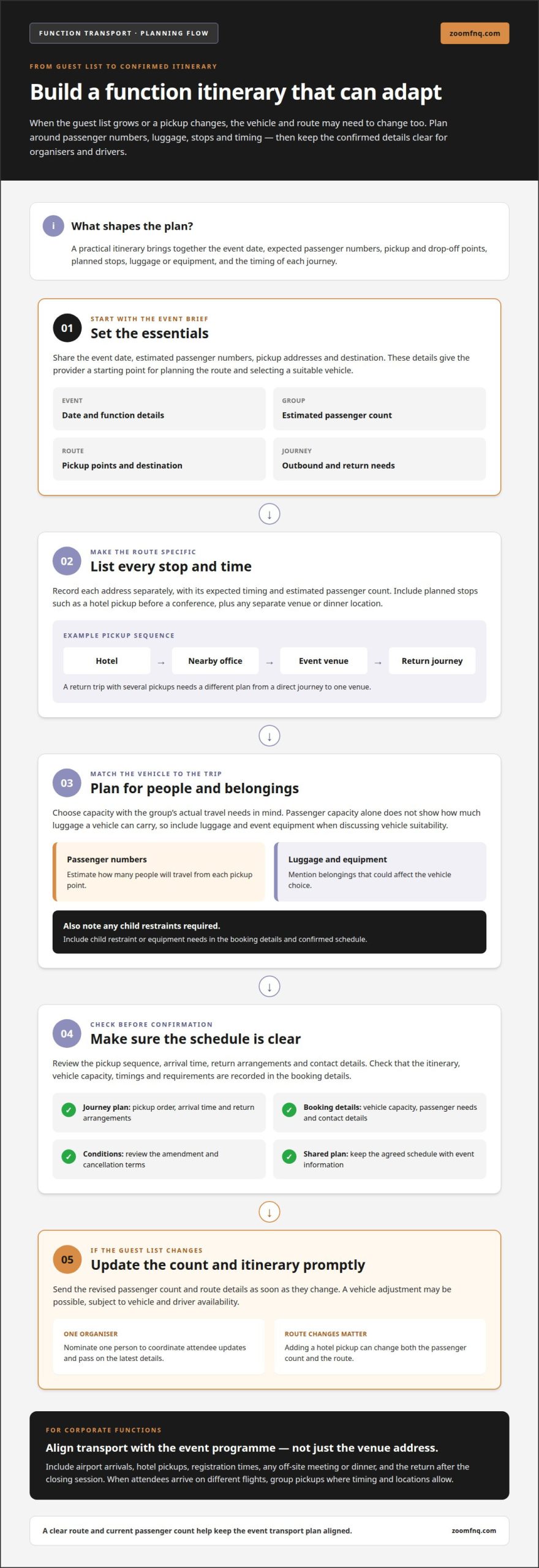
- Include pickup and drop-off addresses, expected timings and any planned stops when arranging an itinerary.
- If guest numbers change, request a vehicle adjustment promptly; changes depend on vehicle and driver availability.
- Choose capacity with passengers and luggage in mind so the vehicle suits the group’s actual travel needs.
- For corporate events, align transport timings with arrivals, the event schedule and departures.
- Plan wedding and event transport around guest pickup points and the journey home, not just the trip to the venue.
Booking options and tailored itineraries
A function itinerary may include several pickup points, venue arrivals and return journeys. Give the charter provider your route, timings and estimated passenger numbers so the vehicle capacity and schedule can be planned around the event.
Booking steps and schedule confirmation
Start with the event date, estimated passenger numbers, pickup addresses and destination. Add each planned stop and its expected timing, such as a hotel pickup before a conference. These details help the provider plan a practical itinerary and select a suitable vehicle.
Before confirming, review the pickup sequence, arrival time, return arrangements and contact details. Keep the agreed schedule with your event information so organisers and drivers can work from the same plan.
For group transport, nominate one organiser to coordinate attendee updates. For example, guests at a corporate function may travel from a hotel and a nearby office. List each pickup separately, estimate passenger numbers at each point, and include luggage or equipment that could affect the vehicle choice. Provide the addresses and expected timings of multiple stops. This gives the provider a clearer route to plan, especially for regional journeys.
Booking details
Pickup and drop-off points, passenger numbers and travel requirements all shape the itinerary. A return trip with several pickups, for example, differs from a direct journey to one venue. Check that the agreed itinerary, vehicle capacity, timings and arrangements are clearly recorded in the booking details.
Review the process for amendments, cancellation terms and other booking conditions. If your function needs child restraints or space for event equipment, include those requirements in your booking details and make sure they are recorded in the confirmed schedule.
Booking lead time
How far ahead should you book function transport in Australia? Book once your event date, venue and likely passenger numbers are clear, leaving time to plan the route and confirm the schedule. Early planning is especially useful when multiple pickups, a regional destination or a large group affect capacity and timing.
For a conference, send the draft schedule as soon as the venue and session times are settled. Use the provider’s booking form to submit the journey details, then keep the confirmed schedule with your event plan.
If guest numbers change after confirmation, promptly send the revised count and itinerary. Changes are subject to vehicle and driver availability. For example, adding a hotel pickup changes both the passenger count and route. Having one organiser manage updates helps ensure the provider has the latest information.
Corporate event transport
A corporate schedule may involve airport arrivals, hotel pickups and a conference venue. Charter transport brings those movements together in one planned itinerary for your event.
Transport for corporate functions
For a conference or corporate function, plan around the event programme, not just the venue address. A pickup before registration and a return after the closing session can help guests travel at useful times. Include airport arrivals, hotels and any separate dinner venue in the route plan.
A 21-seat luxury minibus is one listed option for corporate transport. The suitable vehicle depends on passenger numbers, luggage and the journey. For an executive group, a smaller vehicle may suit a direct airport transfer; a larger group may need coach hire. The itinerary should match the group’s movements and the space they need.
For an excursion or off-site meeting, include the destination and timings alongside the main event schedule. This helps coordinate the outward and return journeys with the programme. A professional driver follows the agreed route, leaving the organiser to focus on speakers, delegates and venue arrangements. If attendees arrive on different flights, group their pickups where timing and locations allow.
Comparing transport options
How does charter transport compare with taxis, rideshare and public transport for functions? A charter can carry a group along a planned route and schedule, while taxis and rideshare generally suit separate trips. Public transport follows its own network and timetable, which may not align with the venue location or event finish time.
Consider what your group needs. A conference ending late at a regional venue, for example, may call for a coordinated return, while attendees at a centrally located function could travel independently. Group transport can reduce the number of separate arrangements, but the itinerary still needs to account for passenger numbers and pickup locations.
Safety, insurance and local rules
What licences and accreditation must Australian passenger transport charter operators have? Applicable requirements can depend on the state or territory, vehicle and service type. Ask which authorisations apply to the booked service and how the operator meets those requirements.
Safety and insurance arrangements also depend on the vehicle and jurisdiction. Before confirming, review the booking documents for the operator’s applicable insurance and safety responsibilities, and make sure the vehicle capacity suits your group. State or city-specific rules may affect passenger transport, so the relevant requirements are those that apply to the journey and service.
For a corporate event involving airport arrivals, a group transport booking can set out the journey details and schedule in one place.
Do the larger coaches have storage?
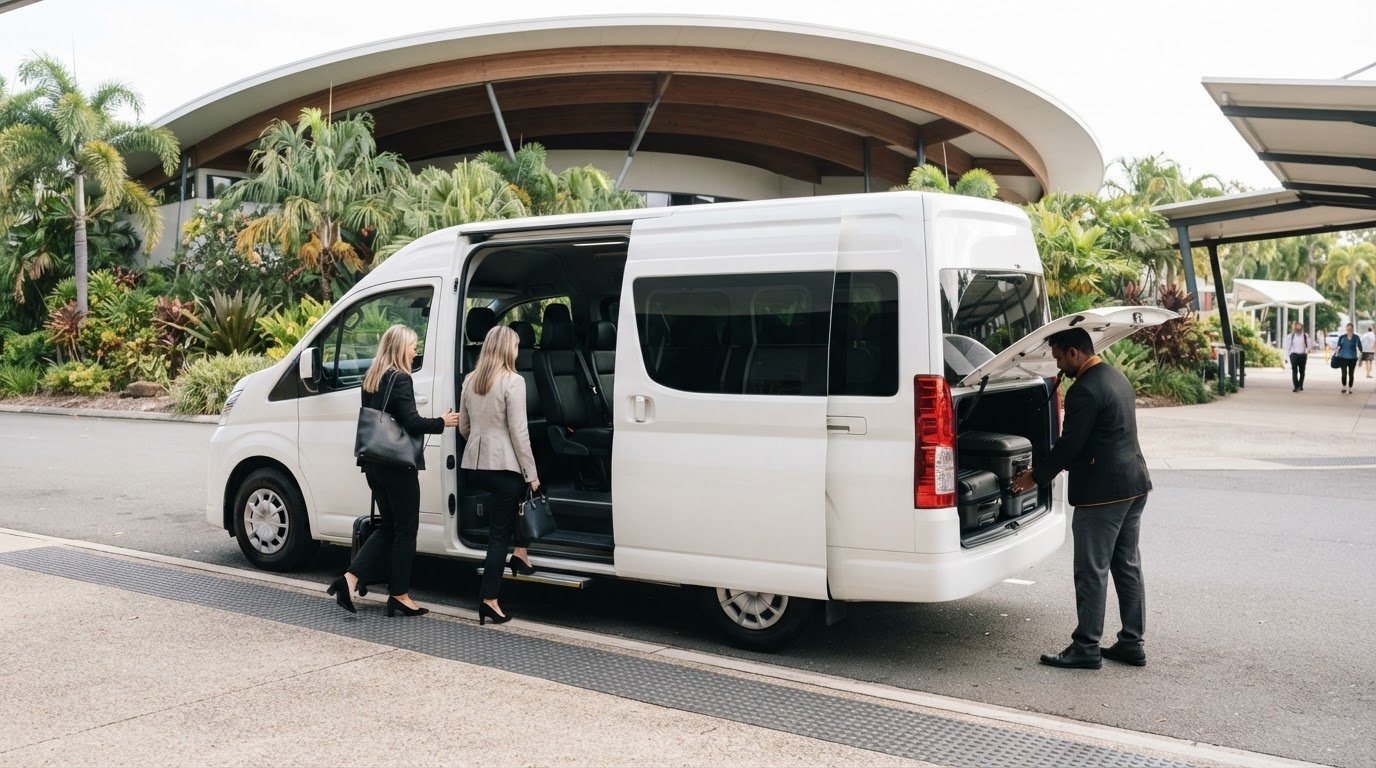
A vehicle’s passenger capacity does not, by itself, tell you how much luggage it can carry. A listed 57-seat transport vehicle gives an indication of passenger capacity, but storage suitability depends on the vehicle and the group’s belongings. For group travel, plan for people and luggage together, not as separate booking details.
Start with a clear passenger estimate, then identify what the group will bring. A conference group with small personal bags has different storage needs from a sporting team with equipment or wedding guests with formalwear and overnight bags. Include oversized luggage such as golf clubs, surfboards or prams in your request. The provider can then consider cargo space as well as passenger numbers when planning the vehicle.
Vehicle capacity also depends on the journey. A short transfer between a hotel and venue may involve different baggage needs from interstate travel, where passengers may carry more belongings. For a regional excursion, list equipment, luggage and planned stops before selecting a vehicle. An empty seat is not a substitute for storage space.
For a group with varied needs, list passengers, standard bags and oversized luggage separately. A company team travelling to a conference, for example, might have hand luggage as well as presentation equipment. A wedding group might have garment bags and prams. Specific details make it clear what needs to fit, unlike a general description such as “some luggage”.
The vehicle allocation should account for both passenger capacity and cargo space. If guest numbers change, the balance may change too: a larger group can leave less room for belongings. Share updated passenger numbers and baggage details together so the transport plan considers both. A smooth departure depends on matching the vehicle to the group’s actual load, not simply choosing the highest passenger capacity.
Before confirming group travel, make sure the planned vehicle and luggage requirements are clearly recorded in the booking details. Note unusual items, how many need transporting and whether passengers will carry them throughout the trip. A team with event equipment, for instance, needs a different arrangement from guests with small overnight bags. These details help the charter provider plan a suitable vehicle and keep passengers comfortable.
Wedding guest transport
A wedding itinerary may include separate guest pickups, ceremony arrivals and an evening return. Planning each leg helps guests know where to board and when to be ready.
Private function and wedding transport
For a private function, map the guest journey from accommodation to ceremony, reception and return. Guests staying at several hotels, for example, may need a planned pickup sequence before the ceremony. Provide each pickup point and the venue address, then align arrival times with the run sheet.
Coaches can suit a shared journey when guests are travelling between the same locations. The right arrangement depends on passenger numbers, route and luggage, including formalwear or prams. A day trip to a regional venue may need a different itinerary from a short transfer between a city hotel and reception.
Wedding guest transfers
Guest transfers work best when the schedule is easy to follow. Give guests the pickup location, departure time and venue details in their invitation or wedding information. If guests are staying at multiple locations, list the pickup order and explain which guests should use each stop.
Plan the return journey too. A reception may finish at a different time from the ceremony, and guests may leave in stages. An agreed departure point and schedule can help avoid confusion outside the venue. If children are travelling, include their needs in the arrangements so suitable child restraints can be pre-booked.
Capacity and timing should reflect the full guest list, not just the bridal party. If numbers change, update the passenger estimate and route before the event. Adding guests from another hotel, for instance, can affect both the pickup sequence and the number of seats needed. Clear information helps the charter provider plan a practical service.
Coordinating wedding travel may also have a wider benefit. Consolidating fifty individual car journeys into a single modern coach trip reduces greenhouse gases and urban traffic congestion. Whether a coach is suitable depends on where guests are travelling from and whether their schedules align.
For a wedding in a regional area, consider journey time, venue access and the return plan together. Guests travelling from different locations may need separate pickups, while a group staying near the venue could share a route. Include relevant details such as mobility needs, luggage and child restraints when arranging transport. These steps help make the guest journey clear from the first pickup to the final drop-off.
Wedding, sporting event, concert and festival transport
For weddings, matches and concerts, a charter provider can plan pickups from your chosen locations, venue drop-offs and return journeys around the event schedule. Share the addresses, timings and group numbers so the route and vehicle plan suit your event.
Transport for weddings and major events
A wedding venue, stadium or festival site may draw guests from several accommodation points. A planned group journey can bring attendees to the same entrance and organise their return from an agreed pickup point. For major events, both passenger capacity and arrival timing matter.
Large-scale events can draw substantial crowds, so consider venue access, passenger flow and pickup and drop-off locations. Organisers can help manage arrivals by choosing a clear meeting point and sharing it with guests before event day.
For an event in an unfamiliar area, provide the venue’s full address and each pickup location rather than relying on a general area name. Specific addresses help define the route, particularly when groups are arriving from different directions.
Event shuttle circuits and returns
A shuttle circuit can connect accommodation, a transport hub and an event venue through repeated trips. The schedule should state where passengers board, the order of stops and the final return point. For a concert, an organiser might plan arrivals before doors open, then set a clear departure location after the performance.
Post-event returns need their own timing plan. A festival may release attendees in stages, while a wedding reception may finish at a set time. Tell the provider whether passengers will leave together or in separate groups so the return arrangement reflects the event’s finish.
Pickup, drop-off and return arrangements
How should you arrange event pickups, drop-offs and returns? Give the provider the pickup addresses, venue entrance, expected arrival time and return location. For multiple groups, identify which passengers use each pickup and whether they need separate drop-off points.
At a large venue, name a practical meeting point rather than simply saying “outside”. Include event access instructions in the itinerary. These details give guests and drivers a shared reference for boarding and departure.
Airport and conference transfers
For airport transfers linked to a conference, provide flight arrival details, accommodation addresses and the conference start time. Minibuses may suit smaller groups travelling together, while separate arrival waves may require a different pickup plan.
A conference itinerary can connect the airport, hotel and venue, then include a return after the final session. Arrange event transport with the journey details and group requirements ready.
Zoom FNQ
Zoom FNQ can organise group transport around your function itinerary. Its Small Group Charters and Small Group Transfers suit event travel when guests need a planned journey between agreed pickup points and destinations.
Share passenger numbers, addresses, timings and any child restraint needs when arranging transport. These details help shape a practical plan for your group, whether guests are travelling to a function or to their accommodation.
Contact Zoom FNQ to discuss transport for your event.
Make your event journey part of the plan
Your transport plan can shape how guests experience an occasion, from setting out to arriving at the venue. If you’re arranging chartered passenger transport for functions in Australia, turn your event’s travel needs into a clear itinerary. Consider how the journey fits around the programme and what will help guests arrive ready to take part.
Zoom FNQ can plan group transport around your event’s requirements. Share the journey details and passenger needs so the transport arrangements can fit alongside the rest of your event planning.
Contact Zoom FNQ to plan your transport. With the journey considered as part of the occasion, you can focus on welcoming your guests.
Frequently Asked Questions
Can a charter operator increase or decrease the vehicle size if your passenger numbers change?
A vehicle change may be possible when passenger numbers change, subject to vehicle and driver availability. Tell the operator as soon as numbers shift, and include any changes to luggage or pickup locations. For example, a smaller group with bulky equipment may still need a vehicle with suitable cargo space. Review the booking details before the event to confirm the revised arrangement.
Can I hire a charter bus for a one-way trip vs return?
A charter itinerary can be requested for a one-way journey or a return trip. A one-way booking suits a group travelling to a venue without a shared ride back; a return booking includes the journey home. State the required journey legs, pickup and drop-off addresses, and preferred timings in your request. For an event, also explain whether guests need a later or separate return.
Can food or soft drink (non-alcoholic) be consumed on the vehicle?
Food and non-alcoholic drinks can be consumed only if the booking terms allow them. Policies may set conditions for open containers, messy food or rubbish, so read the terms before travelling. Individually sealed water, for example, differs from a meal that could spill. If guests need refreshments, include the request in the transport arrangements and follow the operator’s onboard rules.
How many passengers can a charter bus accommodate?
Passenger capacity depends on the vehicle allocated to the booking. Check the stated seating capacity against your confirmed passenger count rather than relying on a general label such as “bus” or “coach”. Also account for child restraints and luggage, which can affect the practical space available. If the group size changes, update the passenger details so the vehicle plan can be reviewed.
Is alcohol allowed on board?
Alcohol is allowed only when the operator’s booking terms permit it. Don’t assume a charter bus is licensed for alcohol or that passengers may drink during the journey. Review the onboard conditions and any event requirements before making plans. For example, guests travelling to a wedding reception can keep alcohol for the venue unless their transport terms expressly allow consumption on board.
Minibus vs Charter Coach: Which Is Better?
The better option depends on your group, luggage and route. A minibus may suit a smaller group travelling between nearby venues, while a coach may suit a larger group or a longer journey. Consider where passengers board, how much cargo space they need and whether the route includes several stops. Choose a vehicle to match the practical needs of the trip, not just the passenger count.
What is chartered passenger transport for functions in Australia?
Chartered passenger transport for functions in Australia is pre-arranged group transport for an event, with a vehicle and driver following an agreed journey. It can support travel to weddings, conferences, sporting events and other functions. The organiser provides details such as passenger numbers, pickup points, destination and timing. The operator uses this information to plan the trip and identify a suitable vehicle for the group.
Related posts

Leave a Comment