
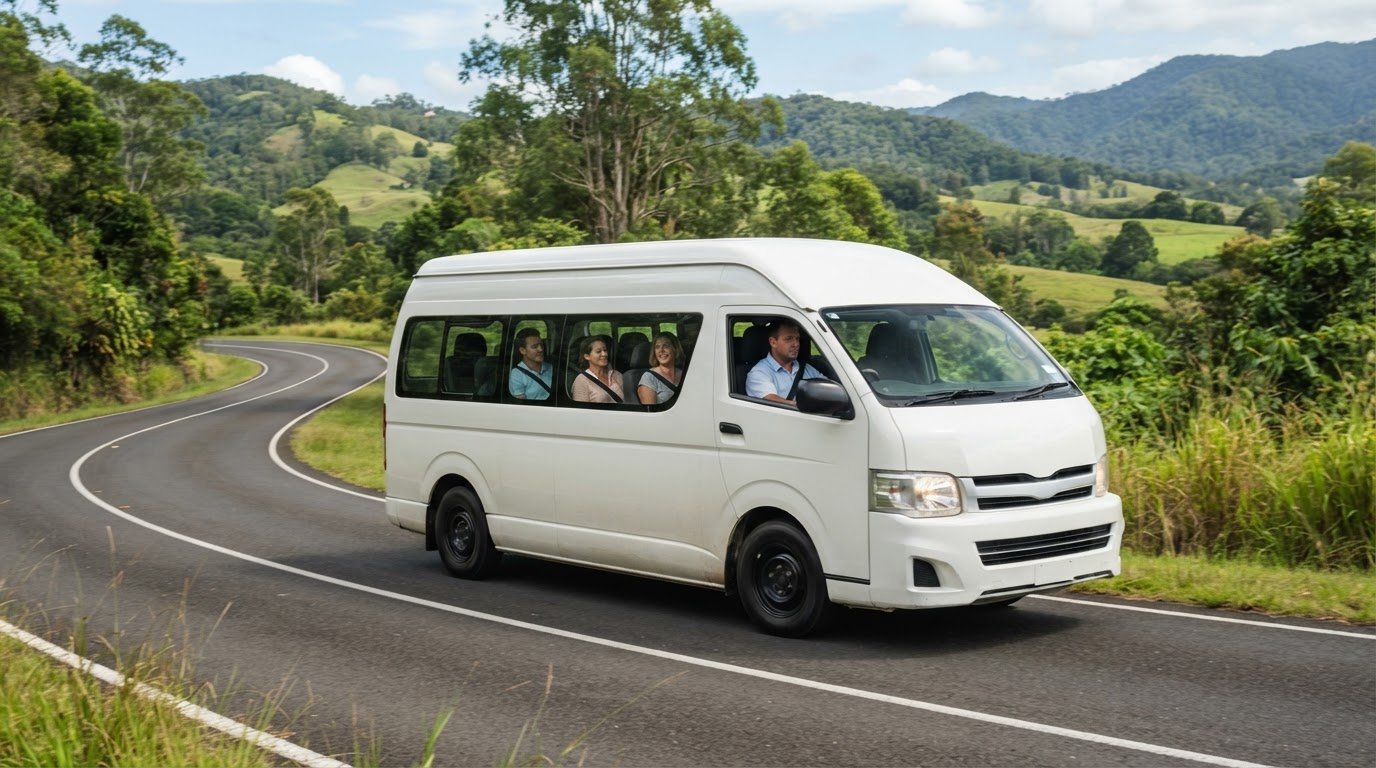
Imagine settling in for a long regional journey, only to feel every bump and bend. What should you consider when planning transport around your passengers and the route? This guide to custom private passenger transit solutions in Australia explains the vehicle and service features that can make a journey more comfortable.
Comfort depends on more than soft seats. Vehicle design and suspension also affect how a journey feels, particularly over longer distances. Learn what independent rear suspension can mean for ride quality, which details to consider when assessing passenger transport, and how to match the arrangements to your travel needs. Practical guidance can help you choose transport suited to your passengers and itinerary.
Key Takeaways
- Understand how vehicle layout, passenger needs and ride comfort shape the right transport option for your journey.
- Compare private transport, charter services, rideshare and public transport by considering privacy, flexibility and route requirements.
- Learn which trip details help a professional plan your booking, including pickup points, passenger numbers, luggage and timing.
- See how transport needs can differ for airport arrivals, work travel, school journeys and regional trips.
- Know which booking and cancellation terms to review so you can plan around changes with greater confidence.
What vehicles and accessibility options are available for custom passenger transport?
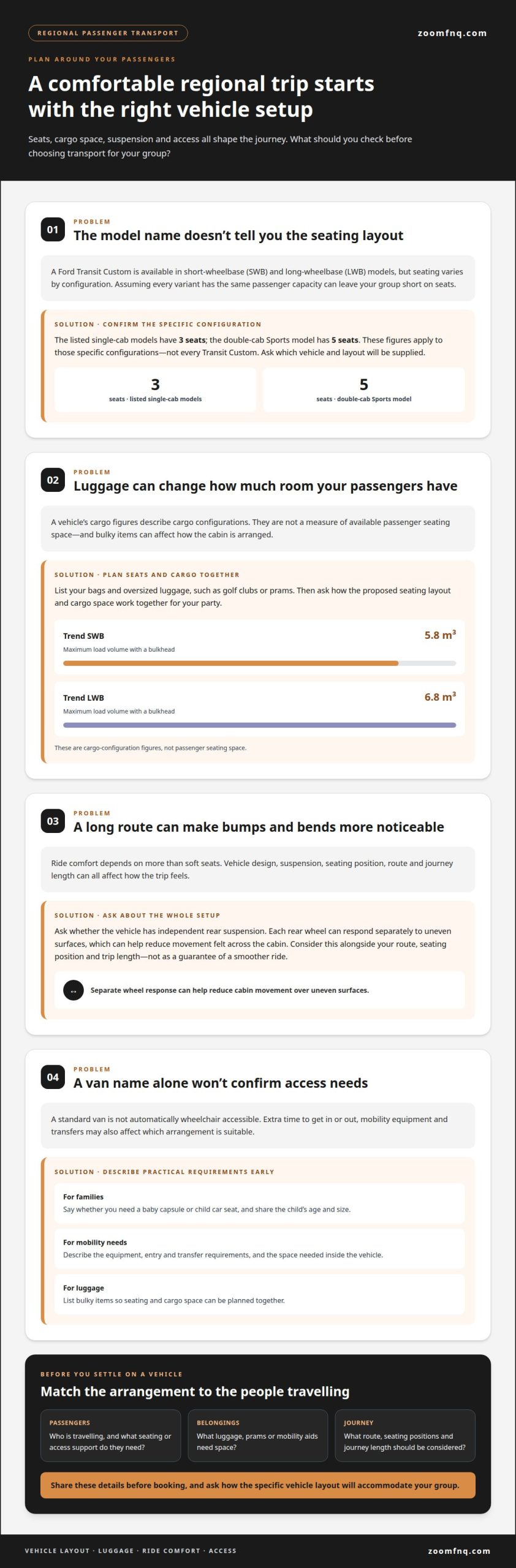
The right vehicle depends on passenger numbers, luggage and access requirements. A Ford Transit Custom comes in short-wheelbase (SWB) and long-wheelbase (LWB) models, but not every variant has the same seating or interior layout. For example, the listed single-cab models have three seats, while the double-cab Sports model has five. These figures describe specific configurations, not a universal passenger capacity for every Transit Custom.
Check how the layout balances seats with luggage space. The Transit Custom Trend SWB has a maximum load volume of 5.8 cubic metres with a bulkhead. The Trend LWB has a maximum load volume of 6.8 cubic metres with a bulkhead. Those figures relate to cargo configurations, so they shouldn’t be treated as available passenger seating space. Prams, mobility aids and oversized luggage can also change how much room remains for passengers.
Ride comfort matters when choosing transport, especially for regional journeys. Independent rear suspension lets each rear wheel respond separately to uneven surfaces, which can help reduce movement felt across the cabin. Ask about the vehicle’s suspension design, and consider the route, seating position and journey length together. A smoother ride depends on the complete vehicle setup, not one feature alone.
Discuss accessibility as a practical requirement rather than assuming it from a vehicle name. Consider whether anyone needs extra time to get in or out, room for a mobility aid, or help transferring into a seat. A standard van is not automatically wheelchair accessible; that usually requires a suitable conversion and access equipment. Sharing passengers’ needs clearly helps identify an appropriate vehicle arrangement.
- For families: identify whether you need a baby capsule or child car seat, and share the child’s age and size when arranging transport.
- For mobility needs: describe the equipment, entry and transfer requirements, and any space needed inside the vehicle.
- For luggage: list bulky items, such as golf clubs or prams, so seating and cargo space can be planned together.
For custom private passenger transport in Australia, match the vehicle to the people travelling, not just the destination. Seating layout, luggage space and suspension design each meet different needs. Discussing these details during planning helps avoid a cramped cabin or an unsuitable access arrangement on travel day.
For the listed Ford Transit Custom diesel variants, the engine is 2.0L EcoBlue diesel and the transmission is an eight-speed automatic. These details can help narrow a vehicle choice, but they do not establish passenger capacity, cargo room, ride quality or accessibility. Ask the operator to confirm the specific vehicle and configuration being supplied, rather than relying on the model name alone.
When comparing options, consider the whole journey: who is travelling, what they need to bring, and whether anyone needs help getting in, out or transferring. Share these requirements before booking and ask how the proposed layout will accommodate them. If your needs change, update the provider promptly so the arrangements can be reviewed. This keeps planning focused on the actual vehicle setup and passengers’ practical needs.
Comparing private, charter, rideshare & public transport
The best option depends on your route, group and schedule. A solo trip across a city has different requirements from an airport pickup for a family with luggage. Compare how each service handles your itinerary, including pickup location, stops, passenger privacy and flexibility. Choose the option that suits the complete journey, not just one leg.
A private transfer reserves a vehicle for your party and follows an agreed itinerary. It can suit an airport arrival, a direct hotel journey or travel between regional destinations. You travel without unrelated passengers, and the pickup and drop-off points can be planned around your trip. This arrangement is useful when a scheduled stop or fixed route would not suit your plans.
Charter transport is planned around a group itinerary. For example, colleagues travelling together to a conference can ride in one vehicle rather than coordinate separate trips. A small group charter can also suit a planned day trip with several stops. Share passenger numbers, pickup points, luggage and timing so the vehicle and route can be matched to the group’s needs.
Rideshare services can be practical for an individual journey between locations served by the app. However, rideshare may be less suited to a multi-stop group itinerary. If you need several vehicles, child restraints or coordinated pickups, those requirements can make planning more involved. For a Cairns Airport arrival, consider whether a single booked vehicle better suits your party and luggage.
Public transport, including trains and buses, follows published routes and timetables. In Sydney, for instance, trains can connect major centres, while buses serve routes that may not align with your accommodation or event venue. It can work well when stops and service times fit your plans. Connections, walking distances and luggage can affect convenience, particularly for travellers arriving after a flight.
- Choose private transport for a direct, exclusive trip with planned pickup and drop-off points.
- Choose a charter when a group needs shared transport around an agreed itinerary.
- Consider rideshare for an individual trip that suits its pickup and destination options.
- Consider public transport when its routes, stops and timetable fit your journey.
For a group trip around Cairns, you can plan a small group charter around your itinerary. Providing the route and passenger details helps shape the transport plan before travel.
How does a professional plan and book a custom passenger transport service in Australia, and what information should you provide?
A transport provider starts by understanding your trip, then plans the route and schedule around it. An airport pickup needs a clear meeting point and destination. A regional itinerary may also involve planned stops, waiting time and a return journey. These details shape a practical booking, rather than a request based on vehicle type alone. For custom private passenger transit solutions in Australia, the itinerary and passengers’ needs guide the transport plan.
Share the details that affect vehicle arrangements, pickup coordination and passenger comfort. Clear information helps plan the journey and reduce uncertainty on travel day. Include the following when requesting transport:
- Journey details: provide the travel date, pickup time, exact collection point and destination. For an airport pickup, include flight details and the arrival terminal if known.
- Passenger numbers: state how many people are travelling, including children. This helps plan seating and any requested child restraints.
- Luggage: describe bags and oversized luggage, such as a pram, surfboard or golf clubs. Bulky items can affect the space available for passengers.
- Stops and timing: list planned stops in order, along with any appointment or event time. A hotel pickup followed by a venue stop needs different scheduling from a direct journey.
- Access needs: explain mobility requirements, boarding assistance or space needed for mobility equipment. Specific information helps the professional plan an appropriate arrangement.
The transport professional then considers the route and requirements together. For a family arriving at Cairns Airport, planning involves the passengers, luggage, child restraints and final address. A business group travelling to a meeting may need coordinated pickup points and an agreed arrival time. For custom private passenger transit solutions in Australia, these practical details help determine how the journey should be organised.
Before confirming, make sure the booking record reflects the agreed itinerary. Check that pickup and drop-off addresses are precise, stops appear in the correct order, and passenger requirements are recorded. If plans change, send the revised details promptly. A changed flight, additional passenger or new stop can affect the vehicle arrangement and schedule.
A clear request gives the transport provider the information needed to plan your journey. Keep the itinerary together with a contact name and reachable phone number for the travelling party. For example, the correct venue entrance and a contact person’s details can help clarify a pickup point if directions change on the day.
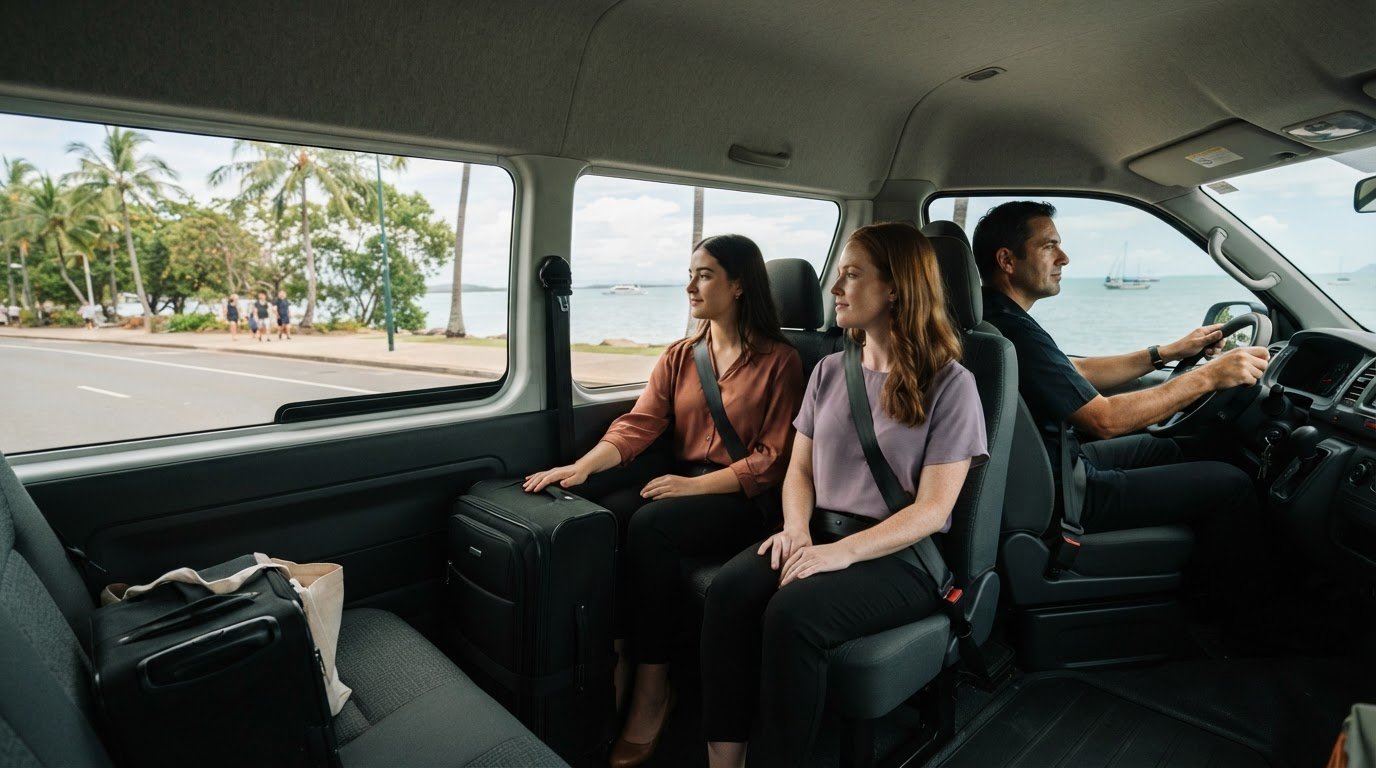
Can Australian providers arrange airport transfers, corporate shuttles, school transport and regional trips
Yes. Passenger transport can be arranged for different types of trips, provided the service suits the journey and passengers’ needs. An airport pickup, staff transport, school excursion and regional transfer each require different timing and coordination. The route, passenger group, luggage and pickup arrangements all shape the plan.
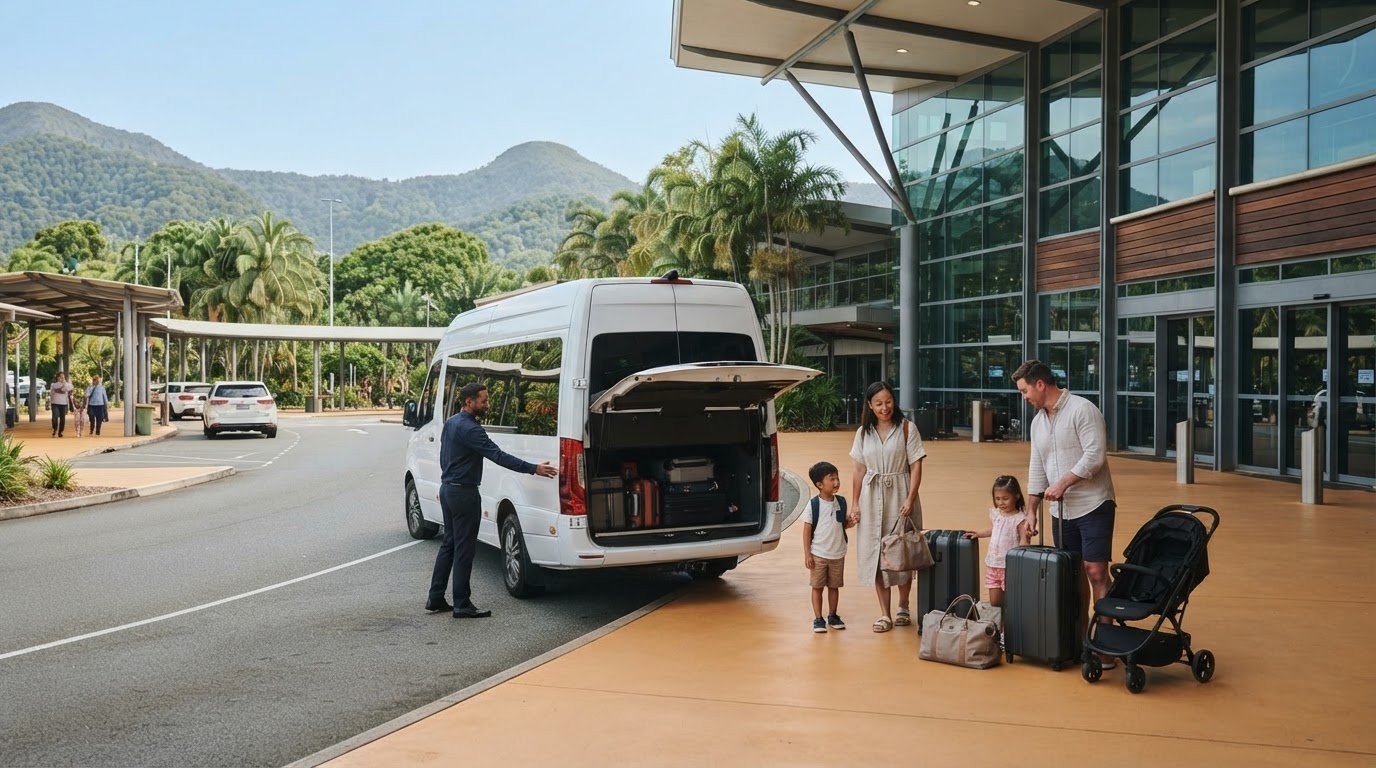
For an airport transfer, planning centres on the arrival point and onward destination. A traveller landing at Cairns Airport may need transport directly to accommodation in Cairns, Palm Cove or Port Douglas. The booking should include flight details, pickup location, destination and luggage requirements. For a return trip, clarify the pickup address and departure schedule too. These details help coordinate the journey with the airport and the passenger’s itinerary.
Corporate transport often requires a coordinated schedule rather than a single point-to-point trip. For example, a business may need staff collected from accommodation and taken to a conference venue, then returned later. The meeting address, start time, passenger numbers and any intermediate stops help map the transport. For groups travelling together, a charter or group transfer can keep the itinerary organised without requiring each person to arrange a separate ride.
School journeys need careful planning around the passenger group and trip purpose. An excursion, sports fixture or scheduled pickup may involve different locations and timings. Organisers should provide the school or venue address, passenger numbers, pickup and return details, and any child restraint needs. The transport provider uses these details to plan the vehicle and route. Arrangements should suit the children travelling and the adults coordinating the trip.
Regional travel brings distance, route planning and stop locations into focus. For example, a journey from Cairns to the Atherton Tablelands has different requirements from a city transfer. Provide precise pickup and drop-off points, planned stops, luggage details and the expected schedule. Clear timing matters on longer trips because a delayed departure can affect later appointments or connections. Sharing the full itinerary helps organise the journey around its purpose.
Before booking, describe the trip in practical terms: who is travelling, where they need to go, when they need to arrive, and what they are bringing. For an airport arrival, include flight and accommodation details. For a corporate or school group, provide the venue, passenger numbers and return plan. For a regional trip, list every stop. A clear brief helps match the service to the task, whether it is an airport transfer, group itinerary or regional journey.
What are the risks and cancellation terms when booking private passenger transport in Australia
A missed pickup can disrupt a flight connection, appointment or regional itinerary. The risk often starts with incomplete booking details, such as an unclear address, incorrect pickup time or omitted stop. “Cairns Airport” alone, for example, may not identify the agreed meeting point. Provide the precise location and keep the confirmed itinerary accessible on travel day.
Cancellation terms are set out in the conditions attached to your booking. Read them before confirming, especially the notice period, how to submit a cancellation, and how a change differs from cancelling. Check the terms for refunds or credits, late changes, missed pickups and service disruptions. Keeping a written record helps you understand what applies to your booking.
Changes can create practical problems even when you still need the journey. An extra passenger may affect the vehicle arrangement, while a new stop can alter the route and schedule. Tell the transport provider promptly if your plans change. Keep a copy of the updated confirmation so you and the driver have the same itinerary.
- Incorrect pickup details: provide the full street address, terminal or agreed meeting point. At a hotel, name the entrance rather than writing only the hotel name.
- Flight disruption: give accurate flight details and follow the agreed process if your arrival time changes. Don’t assume a pickup time changes automatically.
- Passenger or luggage changes: report an added passenger, child restraint requirement or oversized item. These can affect the planned vehicle setup.
- Cancellation notice: use the stated contact method and retain confirmation of your request. Note the deadline and any conditions affecting refunds or credits.
For an airport transfer, distinguish a flight delay from a decision to cancel. A delayed arrival may require a revised pickup arrangement; cancelling the trip is a different request. Your booking terms explain how changes and cancellations are handled. Keep your flight details, booking confirmation and provider’s instructions together so you can act quickly if plans shift.
Before travel, review the confirmed date, pickup point, destination and passenger details. If a disruption occurs, communicate the change through the stated channel and retain the response. For a Cairns journey, accurate details can help prevent confusion between an airport pickup and a city collection. Arrange your transport booking with the trip information ready.
Vehicle details can also matter when comparing a booking or clarifying what to expect on travel day. The Ford Transit Custom’s Reverse Brake Assist functions when reversing at speeds of 2-12 km/h. That specification alone does not establish which vehicle will arrive for a particular booking or what assistance is included, so ask the provider to confirm the vehicle model and any requested features in writing. Do not treat a feature description as a substitute for checking pickup access, passenger needs or luggage arrangements.
If vehicle allocation matters to your plans, record the response with your booking confirmation and ask what happens if the assigned vehicle changes. Confirm that any special requirement is acknowledged before travel, and contact the provider promptly if the confirmation does not match your needs. Clear answers help you decide whether the arrangement is suitable and keep expectations about vehicle equipment aligned with what has been confirmed.
Zoom FNQ
Zoom FNQ helps you arrange private passenger transport for airport arrivals and journeys across Australia, backed by a strong regional specialisation in Far North Queensland. Whether you’re travelling from Cairns Airport to Palm Cove, planning a trip to the Atherton Tablelands or Mission Beach, or coordinating transport elsewhere in the country, a clear itinerary helps shape the journey around your passengers and plans. Share your pickup and destination, passenger numbers, luggage needs and any child restraint requirements when organising your trip. Pre-booked child restraints, including baby capsules and child car seats, can support family travel. For small groups, the service can also be arranged around shared destinations and travel plans. If you’re planning a journey in Australia, contact Zoom FNQ to discuss your transport.
Make your next journey easier to plan
Choosing custom private passenger transit solutions in Australia is an opportunity to shape a journey around how you travel. Think beyond the destination: the arrival experience, comfort between stops and ease of reaching your accommodation all influence how the day begins. A considered transport plan can make the journey feel connected rather than like a series of separate arrangements.
Zoom FNQ provides private transfers to Cairns, Palm Cove, Port Douglas, Mission Beach, Trinity Beach and further afield in Far North Queensland. Share your itinerary and passenger requirements when discussing your journey. For a pre-booked transfer or group charter, provide the route, timing and any planned stops so the transport can be arranged around your plans.
Contact Zoom FNQ about your transport plans and take the next step towards a more considered journey. Your trip can start with a straightforward conversation.
Frequently Asked Questions
What custom private passenger transport services are available in Australia?
Options include private transfers for direct journeys and charter transport for groups following a planned itinerary. You might arrange an airport pickup, transport between event venues or a regional journey. The right service depends on your route, timing, passenger needs and luggage. For example, a group attending a conference may prefer a coordinated charter, while a family travelling with bulky equipment may need a different vehicle arrangement.
Which Australian providers offer bespoke passenger transit solutions for businesses and groups?
Zoom FNQ provides private transfers and small group charters for business and group travel. A charter can suit colleagues travelling together between accommodation and an event, while a private transfer can follow a specific itinerary. To plan a pre-booked arrangement, provide the travel date, route, passenger requirements and any scheduled stops. These details help tailor the transport plan to the group’s purpose and schedule.
How do I choose a private passenger transport service in Australia?
The right transport arrangement depends on your trip details. Share the travel date, origin, destination, passenger requirements and itinerary, including planned stops. For a business group, include the event schedule and pickup points; for family travel, note any child restraint needs. This information helps identify an arrangement suited to the journey and the people travelling, rather than relying on a one-size-fits-all option.
Related posts

Leave a Comment