
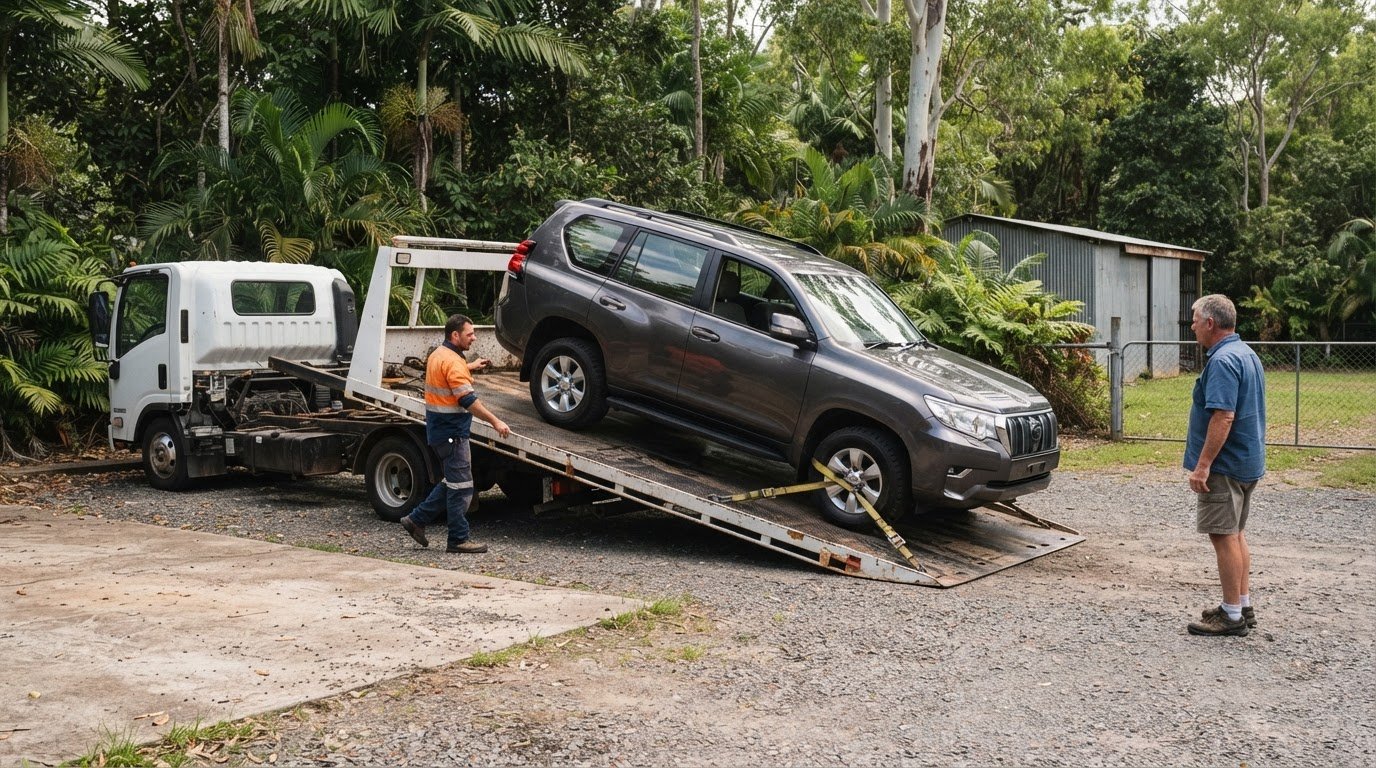
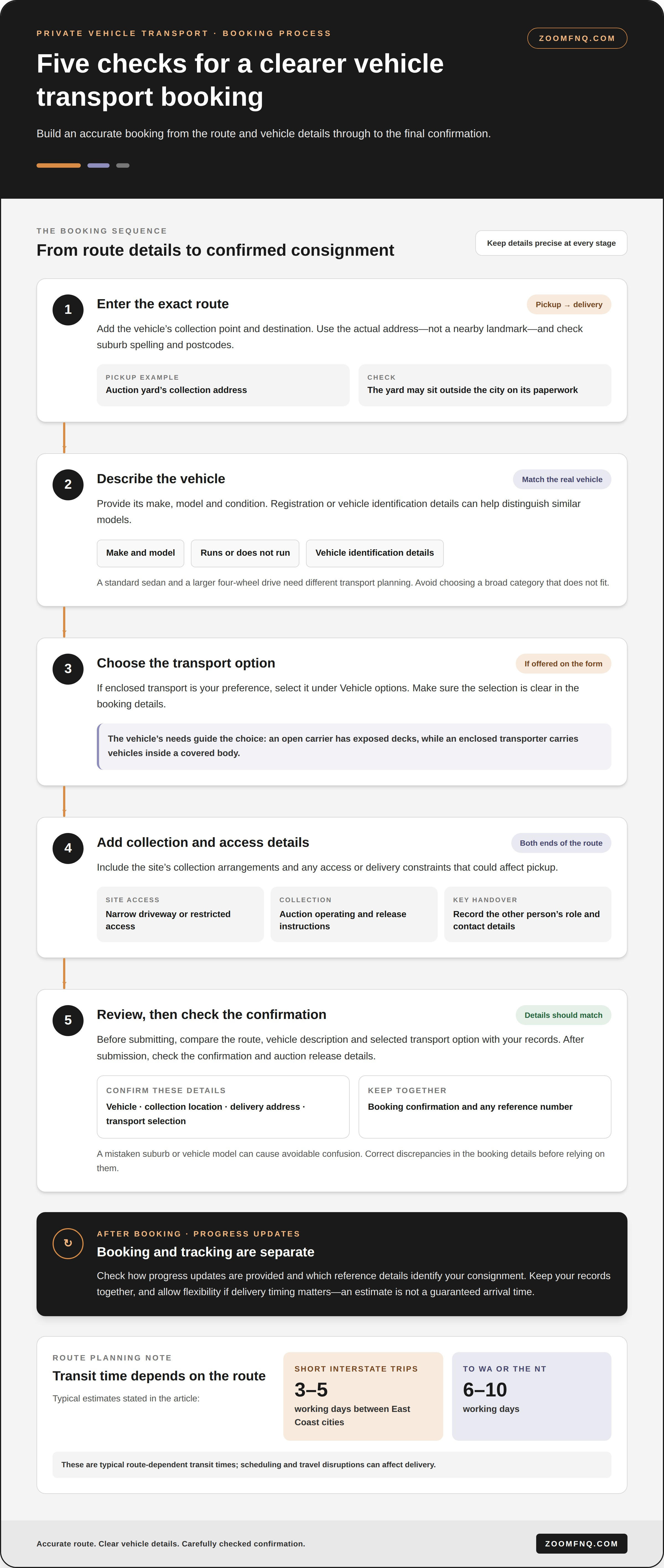
Your vehicle is ready to move, but will it arrive before you need it? For dedicated private motor vehicle transport services in Australia, transit time depends on the route: short interstate trips between East Coast cities typically take 3 to 5 working days, while transport to Western Australia or the Northern Territory typically takes 6 to 10 working days.
That wait can affect travel plans, a new job or a vehicle handover, so it helps to understand what can change the schedule. Distance, pickup arrangements and delays along the route all matter. This guide covers how to arrange a booking and follow your vehicle’s progress, and what transit times and delays to plan for, so you can make informed decisions before the journey begins.
Key Takeaways
- Prepare the route, vehicle details and pickup arrangements to make an online quote and booking more straightforward.
- Learn which fleet and transport arrangements may suit your vehicle, route and delivery needs.
- Plan around route-dependent transit times and understand how scheduling or travel disruptions can affect delivery.
- Use practical criteria to assess whether a transport company suits your private vehicle move.
- Understand how Cairns-area passenger transfers can support your travel plans, and how they differ from transporting a vehicle.
Online booking process
An online booking starts with a clear route: the vehicle’s collection point and destination. For example, enter the auction location as the pickup point and the delivery address as the destination. Exact locations matter because an auction yard, depot and residential address can involve different collection arrangements. Use the vehicle’s actual collection address, not a nearby landmark.
Before booking, gather the details needed to describe the vehicle and move. Registration or vehicle identification details can help distinguish similar models. Note whether the vehicle runs and describe access at both ends. A narrow driveway, restricted site access or auction collection process may affect how pickup is organised. Accurate information helps ensure the booking details match the job you need done.
- Enter the route. Add the pickup and delivery locations across Australia. Check suburb spelling and postcodes, especially when an auction yard sits outside the city shown on its paperwork.
- Describe the vehicle. Provide its make, model and condition. A standard sedan and a larger four-wheel drive need different transport planning, so avoid selecting a broad category that doesn’t match.
- Choose the transport option. Where the booking form offers enclosed transport, select it under Vehicle options. This makes your preference clear during the booking process.
- Add collection details. Include the auction’s operating arrangements, site access instructions and any delivery constraints. If someone else will hand over the keys, record that person’s role and contact details.
- Review before submitting. Match the route, vehicle description and selected option against your records. Correcting a mistaken suburb or vehicle model before booking can prevent avoidable confusion.
After submitting the form, read the booking confirmation carefully. Check that it shows the correct vehicle, collection location, delivery address and transport selection. For an auction purchase, make sure the collection details match the release instructions. Keep the confirmation and any reference number together so the booking can be identified if plans change.
Booking and tracking are separate parts of the process. Look for instructions on how progress updates are provided and which reference details identify your consignment. If your plans depend on delivery, allow some flexibility rather than treating an estimate as a guaranteed arrival time. Clear records, precise locations and a carefully reviewed booking help you stay organised throughout the move.
Review the route details to confirm they match the move you described. Check that the pickup and delivery locations are accurate before finalising the booking. A mistaken suburb or collection point can make it harder to confirm that the booking details match your requirements.
If enclosed transport is your preference, select the enclosed vehicle service under Vehicle options during booking. Confirm that this selection appears in the booking details after submitting the form. Keeping the route, vehicle description and selected service with the confirmation makes it easier to refer to the same information when checking the booking or discussing a change.
Vehicle transport fleet
The transport vehicle affects how your car is loaded, secured and carried. A multi-vehicle car carrier can move several cars on one trip, while an enclosed transporter carries vehicles inside a covered body. A standard sedan and a restored classic, for example, may suit different transport arrangements. The right fit depends on the vehicle, route and collection access.
Open carriers are a common option for interstate car movements. Vehicles sit secured on exposed decks rather than inside an enclosed space. This arrangement may suit a roadworthy hatchback travelling between locations. Enclosed transport provides a covered environment and may appeal if you’re moving a prestige, restored or otherwise high-value vehicle. Let the vehicle’s needs guide your choice, not appearance alone.
Dedicated transport can mean a vehicle is carried specifically for one customer rather than grouped with unrelated consignments. Check what “dedicated” means in the booking terms: it may describe an exclusive transport arrangement or a reserved vehicle, rather than a particular truck design. This distinction matters if you expect the car carrier to travel directly between two locations without other collection or delivery stops.
Fleet suitability also depends on physical access. A large carrier may need room to manoeuvre at an auction yard, while a residential street may restrict loading. A low-clearance sports car can require careful ramp planning. A non-running vehicle may need different loading equipment from a car that can drive onto the carrier under its own power. Share these details when booking.
- Vehicle type: A small hatchback takes up a different footprint from a four-wheel drive or long-wheelbase van.
- Condition: A car that won’t start needs a loading plan suited to its condition.
- Protection preference: Consider whether an open or enclosed arrangement better suits the vehicle.
- Access: Note tight turns, limited parking or site instructions at both locations.
Before collection, confirm how the vehicle will be loaded and where handover will take place. An auction release point, for example, may differ from the address shown on a purchase document. Clear instructions help the transport team match the carrier and collection plan to the job. They also reduce the risk of a driver arriving at the wrong entrance.
Fleet descriptions vary between operators, so compare the actual service arrangement rather than relying on labels such as “leading” or “premium”. Check whether the vehicle travels on an open or enclosed carrier, whether other cars share the load, and how pickup access is managed. These practical details explain how your car will be transported from collection through delivery.
Estimated transit times and delays
A transit estimate helps you plan, but it isn’t a minute-by-minute itinerary. For dedicated private motor vehicle transport services in Australia, use the stated window to organise your plans, then rely on the confirmed collection and delivery details as your practical reference. If your schedule depends on receiving the vehicle, leave time between its expected arrival and your next commitment.
Start by separating the transport schedule from your own deadlines. A vehicle arriving before a home move, work start or planned handover gives you more flexibility than one you need immediately. If you’re arranging a car for a family member, for example, plan how they’ll travel until it arrives. A backup arrangement can prevent a delivery change from disrupting the rest of the day.
- Set your must-have date: Note when you genuinely need access to the vehicle, not just your preferred delivery day.
- Allow a buffer: Leave space between the expected arrival and a booking, move or handover.
- Plan access: Make sure the person receiving the car can be reached and attend the agreed location.
- Keep alternatives ready: Consider how you’ll manage if your plans change before the vehicle arrives.
- Record updates: Keep transport messages and booking details together for easy reference.
Timing can depend on when the vehicle is ready, how collection is coordinated and what delivery access allows. A car that cannot be handed over at the planned time may need a revised arrangement. Likewise, limited access at the destination can affect the handover plan. Include relevant collection and delivery constraints in the booking details so the schedule reflects the actual task.
Keep communication practical. If your delivery address changes, or someone else will receive the car, pass that information through the agreed booking channel. A clear update gives the transport team a chance to account for revised instructions. Avoid relying on informal messages that may not be linked to the booking record.
If a delay affects your plans, first establish what has changed: collection, the vehicle’s progress or the delivery handover. Then adjust arrangements that depend on it, such as a meeting point or garage access. This keeps your response focused and avoids unnecessary changes to unrelated plans.
Treat the estimate as one part of a wider schedule. Your handover arrangements, access details and flexibility all influence how smoothly delivery fits your plans. Leaving some time around the expected arrival can help when coordinating a move, a vehicle handover or travel for someone else.
Which Australian companies offer dedicated vehicle transport for private customers?
Australian private customers can look for vehicle carriers, specialist transport operators and booking brokers. These business types don’t always provide the same service. A carrier may move cars on its own trucks, while a broker arranges transport through another operator. For a move from Adelaide to Brisbane, establish who handles collection, transit updates and delivery before you book.
The word “dedicated” can describe different arrangements. It may mean a vehicle is transported exclusively for one customer, or that a carrier is assigned to a specific consignment. It doesn’t automatically mean a truck travels directly between two addresses without other stops. Ask what the service includes and read the booking terms for details about shared loads, transfers and delivery points.
Use these steps to narrow down the type of operator that fits your move:
- Identify the transport model. Find out whether the business operates the carrier or arranges transport through another company.
- Define the route. A move from Sydney to Canberra differs from a journey between Perth and Cairns.
- Describe the vehicle. A non-running four-wheel drive needs different collection planning from a running hatchback.
- Clarify the service. Establish whether pickup and delivery are door-to-door or depot-based.
- Understand communication. Check how the booking is identified and how transport updates are shared.
For example, a private owner moving a sedan between locations may need to understand where the vehicle changes transport modes. A customer collecting a car from a regional auction may need clear release instructions and a suitable collection point. These practical differences matter more than variations in how operators describe their services.
Before choosing, compare the written service details rather than relying on labels such as “private”, “express” or “dedicated”. Look for the stated pickup and delivery locations, the transport arrangement and the handling process for vehicles that cannot be driven. If a broker is involved, establish which business is responsible for each stage. Clear answers help you understand the journey your vehicle will actually take.
National coverage and local knowledge can mean different things. An operator may manage long-distance routes, while another focuses on regional collections. Match the operator’s route experience and collection arrangements to your vehicle’s starting point and destination. A clear booking should make the operator’s role, transport method and handover points easy to understand before collection.
Depot-to-depot transport is another arrangement to compare when weighing collection and delivery options. Check the service details and confirm which depots apply to your route. Consider whether the collection and delivery arrangements meet your needs before deciding which service to book.
Zoom FNQ
When coordinating interstate or long-distance logistics using dedicated private motor vehicle transport services Australia wide, travellers often need to solve the separate puzzle of passenger movement. While vehicle transport gets your car to its destination safely, managing your own journey requires a different approach. Zoom FNQ provides essential context for handling passenger travel in Far North Queensland while your vehicle is being transported independently.
After arriving via a major flight, you may need reliable transport to your accommodation or final destination. Zoom FNQ’s airport transfers are designed for that specific passenger journey, ensuring seamless connectivity without mixing passenger transit with vehicle haulage. If you’re staying in a regional coastal destination, a private transfer can take you and your party directly there while your car travels on a dedicated vehicle transporter.
Complex regional itineraries often call for specialised routes. A traveller heading inland can utilise Atherton Tablelands transfers, while someone planning a coastal escape can consider Mission Beach transfers. Knowing your destination helps you identify the relevant passenger transport service while you organise your vehicle delivery separately across the national network.
- Cairns Airport: Arrange passenger transport promptly after landing.
- Palm Cove: Plan the journey between Cairns and your coastal accommodation.
- Atherton Tablelands: Organise reliable transport for inland regional destinations.
- Mission Beach: Plan onward travel towards the Cassowary Coast.
Families should request a baby capsule or child car seat when booking their transfer to ensure complete peace of mind. Sharing your family requirements in advance helps clarify the travel arrangements for everyone. If you’re travelling with children after a long flight, planning passenger details ahead of time makes the transition smoother. Zoom FNQ provides professional, private chauffeur-driven services tailored to your itinerary.
As a family-owned provider with deep local knowledge focused on Far North Queensland journeys, understanding local logistics matters when your itinerary includes regional stops. Think through the whole trip holistically: your vehicle’s collection and delivery arrangements, your arrival point, and how you and your passengers will reach your final accommodation. Each leg serves a different purpose within your broader travel plans.
If your next step involves coordinating seamless passenger travel alongside your vehicle logistics, contact Zoom FNQ to discuss the private transfer options that best fit your Australian travel itinerary.
Frequently Asked Questions
How long does it take?
Transit time depends on the route and the schedule for your booking. Use the estimated window provided for your journey, and don’t treat its earliest day as a fixed arrival appointment. If you need to be present for handover, keep your contact details current and arrange for someone else to receive the vehicle if your plans change. This gives the delivery team a clear point of contact.
Is insurance included?
Insurance inclusion depends on the transport agreement, so don’t assume cover is part of every booking. Read the policy or booking terms for the insured value, excess, exclusions and claims process. Check whether cover applies to your vehicle’s specific condition and transport method. If the car has existing damage, keep dated photos and a written condition record so its pre-transport state is clear.
Is your service door to door?
Door-to-door service may be available, depending on the provider and route. If you need collection from a home or workplace, provide the full address and explain any access restrictions. For delivery, decide who can accept the vehicle and where it can be safely handed over. Confirm those details in the booking record rather than relying on informal arrangements.
What areas are covered?
Coverage varies between transport operators and routes. A company may handle major connections but use different arrangements for regional destinations. Provide the pickup and delivery postcodes when enquiring, and state whether either address is outside a town centre. This helps establish whether the locations fit the operator’s service area and whether the handover needs to take place at another agreed point.
What are dedicated private motor vehicle transport services in Australia?
These are arrangements for moving a customer’s vehicle between agreed locations on a transport carrier. “Dedicated” can refer to how a booking is allocated, rather than guaranteeing an uninterrupted trip on one truck. If exclusivity matters to you, look for a clear description of what is reserved for your vehicle. The booking terms should explain the service arrangement in practical terms.
What transport arrangements are available for dedicated car transport in Australia?
The right arrangement depends on the route and your vehicle’s transport requirements. A compact car travelling between nearby locations presents a different job from a larger vehicle moving across the country. Booking details should reflect the vehicle’s size and condition, collection and delivery requirements, and selected transport arrangement. Provide accurate information so the provider can confirm what suits the journey you need.
What pickup and delivery options are available for private motor vehicle transport in Australia?
Options can include collection or delivery at an address, or a handover at an agreed transport location. Clarify who will release the vehicle, who will receive it and how the keys will be passed over. If another person is handling either end, share their details through the booking process. Clear handover instructions help avoid confusion on collection or arrival day.
What insurance and liability cover should I check when booking vehicle transport in Australia?
Check who is responsible for the vehicle at each stage, including loading and unloading, and what process applies if damage is found. Review any exclusions for pre-existing damage, non-running vehicles or particular transport methods. Find out how promptly a claim must be reported and what evidence is needed. Keep your booking confirmation, condition photos and handover records together in case you need them.
Leave a Comment