
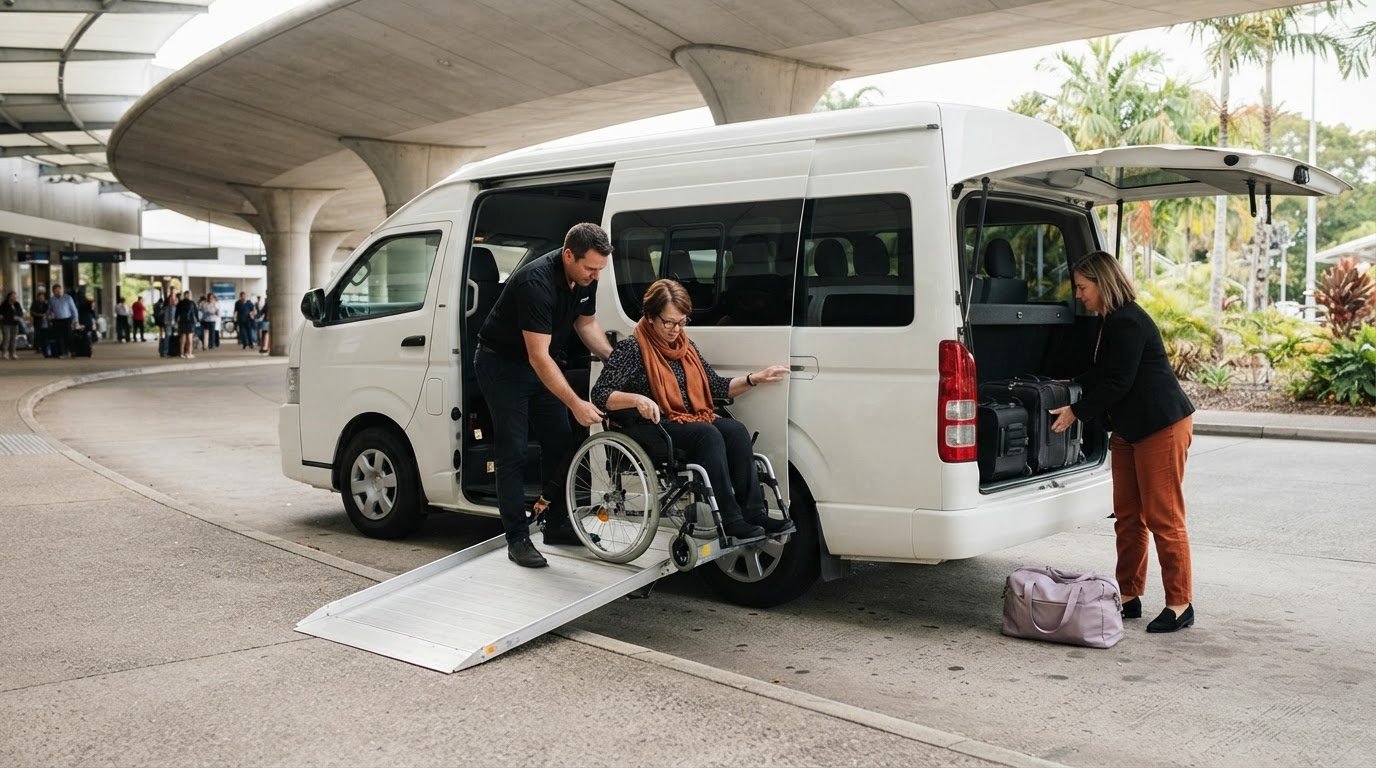
Your group is ready to leave, but will everyone have a seatbelt, room for luggage and a smooth trip from the airport? Choosing reliable regional chartered passenger transport in Australia means looking beyond the vehicle to the details that help a journey run calmly and professionally.
It’s reasonable to want clear answers before booking, especially when arranging travel for a school, event or group with different needs. Seatbelts, wheelchair access, driver knowledge and how booking changes are handled all matter. The right transport option depends on your group, route and itinerary.
This guide explains what to consider when arranging regional charter transport, including the details to provide and the questions that help you understand the service. You’ll learn how airport transfers, group travel and other transport options can fit your plans, and what reliable communication and local knowledge look like in practice.
Key Takeaways
- Assess a regional operator’s reliability through punctuality, clear communication, clean vehicles and professional drivers with local route knowledge.
- For school, corporate, event and workforce travel, match the vehicle and itinerary to your group’s pickup points, schedule and passenger needs.
- When arranging transport, share passenger numbers, locations, dates, times and access requirements so the service can be planned around your trip.
- Ask how seatbelts, wheelchair access and booking changes are handled, particularly when your group has specific mobility or travel needs.
- For airport and regional group journeys, consider how luggage, flight timing and onward destinations shape the right transport arrangement.
Experienced drivers and local route knowledge
For a charter journey, an experienced driver and a well-planned route help coordinate pickups, stops and arrival times. Choose an operator that can explain its driver standards, vehicle maintenance and approach to fatigue management.
Passenger charter and driver fatigue requirements depend on the relevant jurisdiction and service. Ask how the operator plans driver hours and rest breaks for your route, including any overnight travel.
Driver qualifications and accreditation
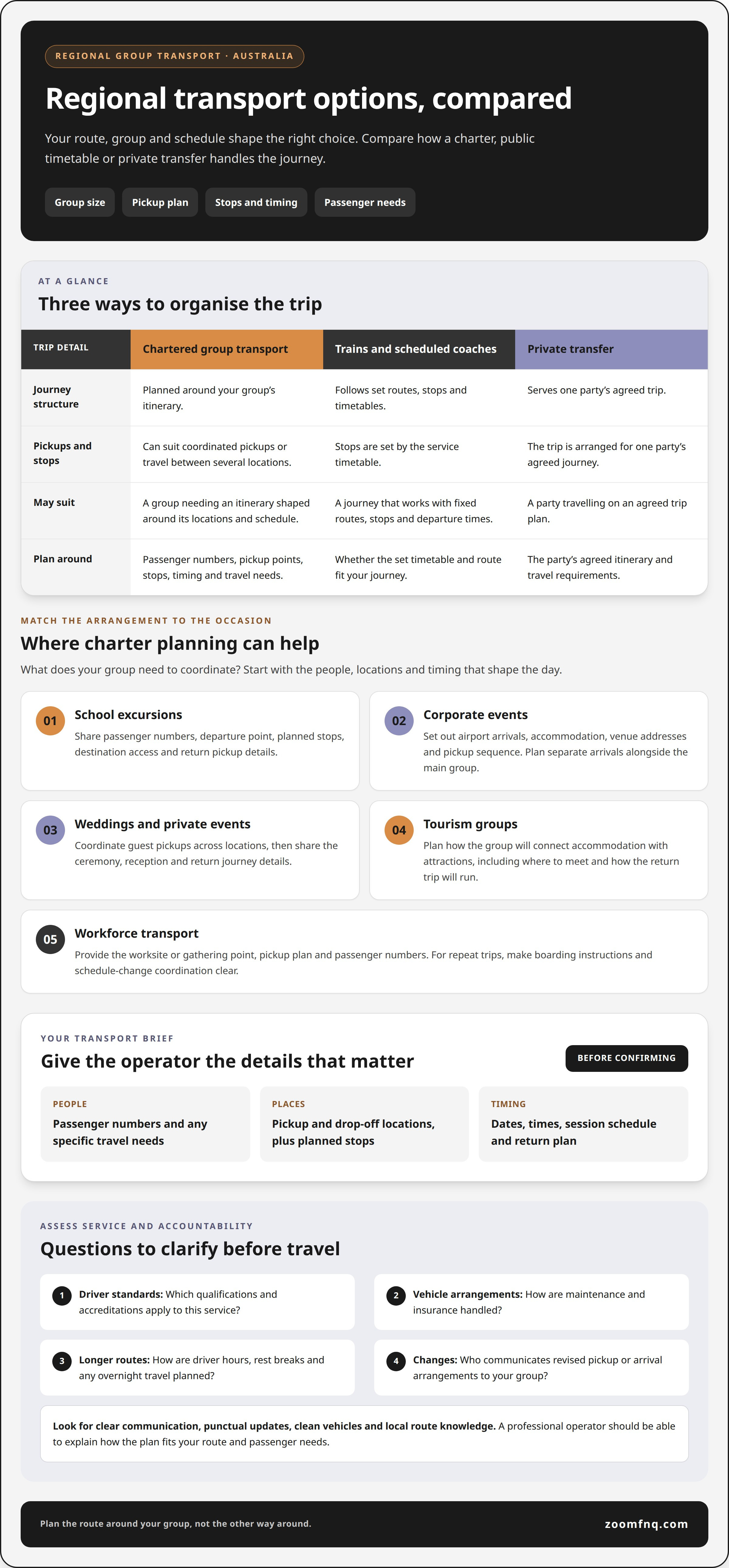
Ask which driver qualifications and accreditations apply to your Australian charter and how the operator assesses them. Request a clear explanation of vehicle maintenance and insurance arrangements. These details help you understand who is responsible for the journey, rather than relying on a general claim of experience.
Credentials and vehicle checks should relate to the service you’re booking. A coach journey between regional towns, for example, may need different planning from a short city transfer. A professional operator should be able to explain the relevant checks and how they support your trip.
Local route knowledge
Regional routes can involve unfamiliar pickup points, changing road conditions and tight arrival windows. A driver familiar with the area can plan for practical details, such as the correct venue entrance or a suitable stop for your group. Share your itinerary and timing constraints early so the operator can plan around your destinations.
Local knowledge can also help when an itinerary changes. If an event venue alters its access arrangements, clear communication helps the operator consider a workable alternative. Drivers familiar with local roads can explain route choices and keep the group informed about revised pickup or arrival arrangements.
Professional driver standards
Professionalism includes punctual communication, courteous passenger care and a calm approach to changes. Notice whether the operator explains pickup instructions clearly and responds directly to your itinerary details. A school group travelling with luggage, for example, needs a driver who can follow the agreed schedule and communicate route adjustments to its organiser.
Extended regional trips also require practical planning for the driver. If the itinerary includes an overnight stop, establish how driver meals and accommodation are handled before travel. On a longer coach journey, discuss how planned breaks fit the route and schedule.
Reliable regional chartered passenger transport in Australia depends on accountability as well as local familiarity. Clear driver standards, relevant credentials and a considered itinerary give you useful criteria for assessing a service. Share your route, stops and timing needs, then discuss how the operator will organise the journey.
School, corporate, event, tourism and workforce transport
There is no single best regional charter operator for every Australian state or territory. The right fit depends on your route, group’s needs, vehicle suitability, driver standards and communication. For a school excursion, the operator needs to understand the pickup plan, destination access and timing. Compare how providers describe their service and whether reviews mention punctual arrivals, friendly drivers, clean vehicles and reliable updates.
Charter transport lets you plan a journey around your group’s itinerary. Trains and scheduled coaches follow set routes, stops and timetables, while a private transfer serves one party’s agreed trip. A charter can suit a group travelling between several locations or needing coordinated pickups. Choose based on whether you need a direct journey, a fixed public timetable or transport arranged around your group.
For a corporate event, a clear transport plan helps delegates travel between the airport, accommodation and venue. Give the operator the event address, arrival points and required pickup sequence. If a keynote speaker arrives separately, plan that transfer alongside the main group’s schedule. One point of contact for the itinerary can help organise passenger updates and changes throughout the event.
A school excursion needs a route and pickup schedule that work for students, staff and the destination. Share passenger numbers, departure point, stops and specific travel needs with the operator. A group visiting a museum, for example, may need a practical drop-off point and planned return pickup. Clear trip details help the operator shape the service around the excursion.
Weddings and private events often involve several pickup locations, a ceremony venue and a reception site. A charter can bring guests along an agreed itinerary instead of leaving each person to arrange separate travel. For tourism groups, the same planning can connect accommodation with attractions. Tell the operator where guests need to meet and whether the return journey follows the same route.
Bus hire can also support workforce transport when employees need to reach a worksite or gathering point. Provide the work location, pickup plan and passenger numbers, then discuss the route and timing. A workforce itinerary may differ from a one-off event because repeat trips need consistent instructions. Clear communication helps employees know where to board and who coordinates schedule changes.
Prepare a transport brief before confirming a group itinerary. Include passenger numbers, pickup and drop-off locations, dates, times and relevant passenger needs. For a wedding, add venue addresses; for a corporate event, include session times; for a school trip, list planned stops. These details help the operator select a suitable vehicle and plan practical boarding arrangements.
Groups planning a charter can share their group itinerary and travel details to begin organising transport. A clear brief helps connect the arrangement to your event, excursion or work schedule, whether passengers need a direct transfer or coordinated stops. The right operator is the one whose service and planning suit the journey your group needs.
Seatbelts, wheelchair access and booking changes
Before confirming a regional charter, make sure the booking records passenger numbers, pickup and drop-off locations, travel dates and times, and specific needs. Include seatbelt requirements and whether anyone uses a wheelchair. These details help the operator plan an appropriate vehicle and itinerary. For example, note whether a passenger needs step-free boarding or space for mobility equipment.
Ask how seatbelts are arranged for the vehicle and passenger group, including children travelling with adults. If you need child restraints, request a baby capsule or child car seat when booking. For wheelchair access, explain the passenger’s boarding and mobility needs clearly. Accessibility can affect boarding arrangements, available space and the journey plan.
Book as early as practical once your dates, route and group needs are clear. The lead time depends on the trip’s complexity, date and vehicle requirements. A group with accessibility needs or several stops benefits from allowing time to plan those details. Send the complete itinerary together rather than adding essential information in separate messages later.
Provide the passenger number, locations, dates, times and any access requirements when booking. Review the proposed itinerary alongside these details. If a school group has a wheelchair user, for instance, the vehicle and pickup plan should reflect that need.
Booking directly with an operator can make communication more direct and may allow greater flexibility as plans change. Keep one point of contact responsible for updates. If an event shifts its finish time or an extra stop becomes necessary, send the new details promptly so the operator can assess the revised itinerary and explain how it affects the booking.
Cancellation terms and amendment processes vary between operators. Before confirming, read the written terms for changes, cancellations and any conditions tied to a revised schedule. Ask for the agreed itinerary and booking details in writing. That record gives your group organiser a clear reference if pickup locations, passenger numbers or travel times need updating.
A clear booking process moves from trip details to confirmation of the itinerary and passenger needs. Keep the operator’s response with the booking record, particularly for a multi-stop journey or an accessible vehicle request. You can submit your regional transport booking details with the route, schedule and requirements together.
Airport transfers and group travel
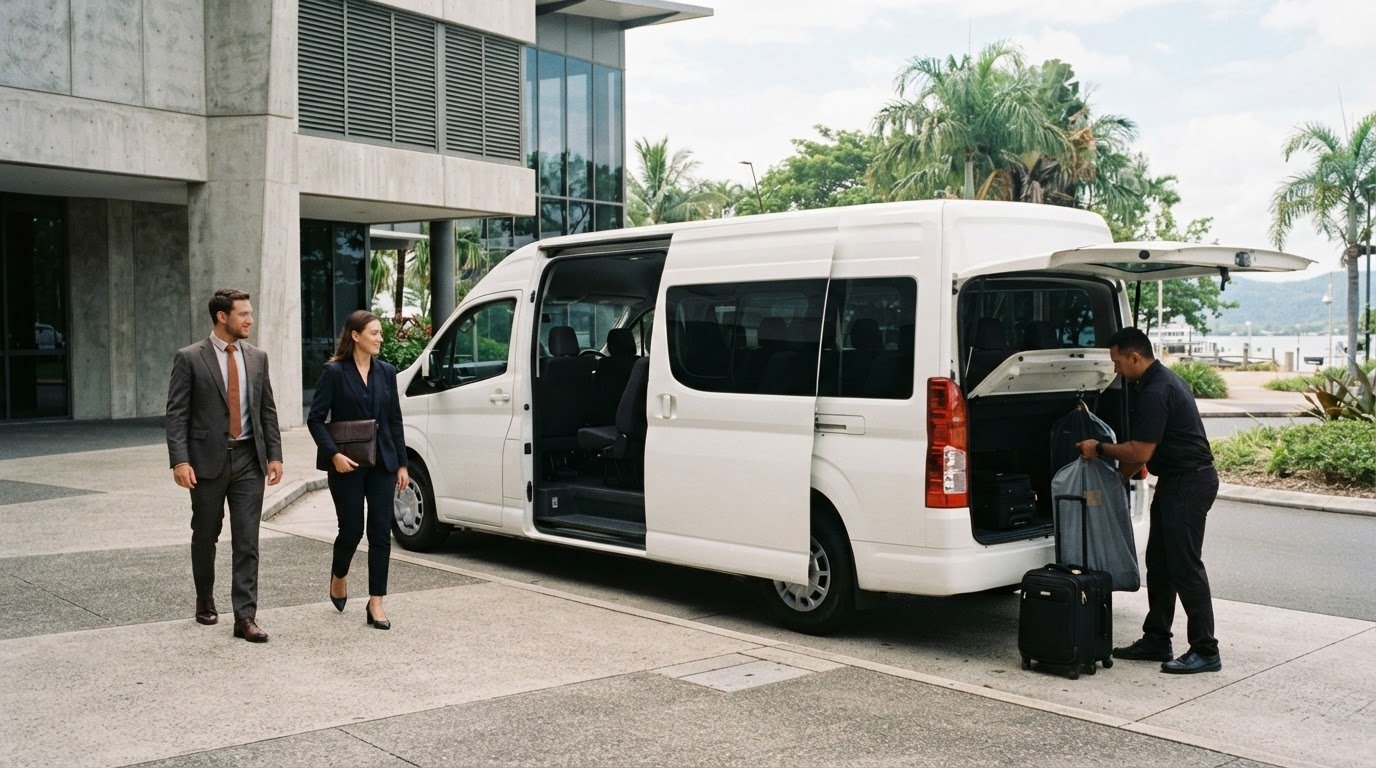
Airport group travel needs coordination for arrivals, luggage and onward destinations. A clear pickup plan helps keep the day’s itinerary running smoothly.
Airport transfers for groups
For an airport pickup, give the operator the arrival airport, flight details, passenger count and final destination. Include luggage needs and any planned stops, such as accommodation before a regional event. These details help plan the vehicle and pickup arrangements around the whole group, rather than treating each passenger as a separate trip.
A group arriving together for a conference, for example, may need transport from the airport to a hotel, then onward to a venue. Agreeing on the pickup point and itinerary helps passengers know where to meet. If travellers arrive on separate flights, provide each arrival detail so the operator can plan the group’s transfers clearly.
Remote areas and regional town coverage
Regional charter operators generally serve defined areas, so choose one whose service area includes your airport and destination. Coverage can differ between regional towns and remote locations. Share the full route, including any town, accommodation or worksite beyond the airport, rather than describing the journey only as an airport transfer.
For a trip between an airport and a remote destination, identify the pickup point, drop-off location and any intermediate stops in the itinerary. A journey to a regional town may have different route requirements from one continuing to an isolated worksite. Clear addresses and timing give the operator the details needed to plan the trip.
Choose transport to suit your travel day. A private charter can work well for a group needing a direct airport pickup and a set of agreed stops. Scheduled services follow their own routes and timetables, so they may not align with every group’s arrival or onward destination. Your itinerary determines which arrangement fits.
Keep the airport plan in one shared itinerary. Include passenger names or group identifiers, arrival details, meeting point, luggage and final destination. A tour organiser, for instance, can give each traveller the same pickup instructions before departure. That reduces confusion at a busy terminal and helps the group travel together.
Remote travel needs practical coordination beyond the terminal. Share destination access details, planned stops and timing constraints with the operator. If the route includes a regional town before a remote site, set out the sequence clearly. This gives the driver a useful plan and helps passengers understand the journey.
A seamless group transfer is built on clear details, not assumptions. Confirm who is coordinating the group, where passengers will meet and how onward travel connects with the arrival. For a school, event or tourism group, one agreed itinerary can keep everyone informed while the operator organises the route to the destinations.
Which regional chartered passenger transport operators in Australia have reliable safety and service records?
No single operator is the right choice for every Australian route. Look for experience relevant to your journey, such as regional roads, airport pickups or group itineraries. Customer reviews can help when they mention punctual arrivals, friendly drivers, clean vehicles and reliable communication. Specific examples are more useful than general praise because they describe what happened during a real trip.
Read several reviews for recurring details rather than relying on one comment. Repeated mentions of clear pickup updates, for example, may indicate consistent communication. A review about an airport journey may tell you little about a multi-stop school excursion, so compare feedback with the service you need. Note whether reviewers clearly describe the route, group type or transport issue.
Safety information should be relevant to the vehicle and trip. Look for clear details about driver credentials, vehicle checks and insurance arrangements. The operator’s explanation should identify what applies to your journey rather than rely on broad statements about safety. For a coach trip involving regional roads, the operator’s planning and vehicle upkeep are pertinent.
Service reliability also shows in how an operator handles practical details. Consider whether pickup instructions are clear, itinerary changes are communicated and passenger needs are recorded accurately. An event organiser, for example, benefits from knowing who coordinates updates if a venue changes its pickup point. Clear responsibilities make it easier to understand how the service is managed.
Transport rules and oversight can vary between Australian states and territories. Consider the jurisdiction relevant to your route, as well as the type of service and vehicle. This context can help you assess whether the operator’s explanation of its credentials and procedures fits your journey.
Use these signals to assess the record:
- Reviews describing punctual arrivals and timely communication.
- Feedback about clean vehicles and courteous drivers.
- Information that explains relevant driver and vehicle checks.
- Examples related to a similar route, group or journey purpose.
A tourism group travelling between an airport and regional accommodation, for instance, needs different evidence from a workforce charter serving a regular pickup point. Match the operator’s demonstrated experience to your itinerary, then consider whether its communication and planning address the journey. This is more useful than relying on a broad claim of nationwide coverage.
If you’re arranging group transport, send your itinerary and transport requirements to begin planning the journey.
Zoom FNQ
Zoom FNQ is a premier private transfer service for travellers planning journeys across Australia’s regional transport networks. Its services include Cairns Airport Transfers, Palm Cove Transfers, and customized long-distance passenger routes. For groups, Small Group Transfers can suit an itinerary where passengers need to travel together across regional corridors. Share your route, pickup and drop-off points, schedule and passenger requirements when booking in advance, so the journey can be planned around your trip.
Whether you’re arriving at a regional aviation hub or travelling onwards to an interstate or country destination, Zoom FNQ offers a dependable option for organising reliable regional chartered passenger transport australia. Contact Zoom FNQ about your transport plans.
Plan your next regional journey with confidence
Your next trip deserves a transport plan that fits the journey, not one that adds another task to your day. For reliable regional chartered passenger transport in Australia, choose an arrangement that connects your arrival with the places you need to reach. A considered plan can help your group travel with greater ease, whether you’re heading to accommodation, an appointment or a regional destination.
Zoom FNQ offers Cairns Airport Transfers, Cairns City Transfers and Palm Cove Transfers. These options can help organise travel between key points in the Cairns region. Choosing a clear starting point and destination gives your journey a practical foundation, while a well-planned transfer lets you focus on what comes next. Book in advance for your journey.
Ready to organise your journey? Contact Zoom FNQ to plan your transport. Take the next step towards a more settled trip.
Frequently Asked Questions
Are seatbelts available?
Ask whether the assigned vehicle has a seatbelt for every passenger in your group. If your booking includes adults and children, share the passenger details and restraint needs in advance, and request a baby capsule or child car seat when booking. Confirm how passengers will be seated, especially if someone needs extra space or assistance boarding. This gives the operator a clear picture of the group and helps avoid surprises when everyone arrives to travel.
How much does regional chartered passenger transport cost in Australia per hour, kilometre, or day?
There is no single Australia-wide hourly, kilometre or daily amount for regional charter transport. The charging basis and final quote depend on the operator’s terms and your itinerary, including distance, duration, vehicle type, passenger numbers, stops and pickup location. Share the full journey plan to receive a relevant quote. Compare what each quote includes, such as the vehicle, driver and requested route, rather than comparing the quoted basis alone.
What vehicle sizes and accessibility options do Australian regional charter operators offer?
Vehicle sizes and accessibility features vary between operators, so describe your group before choosing a charter. Explain passenger numbers, luggage, mobility equipment and any boarding support needed. For a wheelchair user, specify whether they can transfer into a vehicle seat or need to remain in their wheelchair during travel. These details help establish which vehicle and boarding arrangement suit the passenger, rather than relying on a vehicle label alone.
What questions should I ask before booking a regional charter transport operator?
Ask what vehicle is planned, how the itinerary will be managed and who will communicate changes on travel day. Clarify the pickup point, planned stops, luggage arrangements, accessibility features and relevant driver credentials. For a school or event group, ask how the organiser and driver will coordinate boarding. Request the agreed route and inclusions in writing so the booking record reflects what your group expects.
What are the main risks and cancellation policies for regional charter bookings in Australia?
Changes to passenger numbers, pickup locations or travel times can affect the planned vehicle and itinerary. Cancellation terms also differ between operators, so read the written policy before confirming. Check how the operator handles cancellations, amendments and delayed arrivals, then keep the terms with your booking record. If an event schedule changes, for example, notify the operator promptly and ask for the revised itinerary in writing.
Related posts


Leave a Comment